


How to Make Your House Non-Toxic: A Room-by-Room Plan

Table of Contents
Last Updated: October 17, 2026
Start With Ventilation: How to Improve Indoor Air Quality at Home
The fastest way to make your non-toxic house is to dilute what's already floating in it.
Here's why it matters. The EPA's indoor air quality guidance points out that Americans spend about 90% of their time indoors, where concentrations of some pollutants can be two to five times higher than outside.
A non-toxic house is a home where the air, surfaces, and products your family touches daily carry as few harmful chemicals as possible. You don't need a perfect home. You need steady habits.
Daily Habits That Move Fresh Air Through Your Home
Open windows for 5-10 minutes each morning, even in winter
Run the kitchen exhaust fan every time you cook
Run bathroom fans for 15-20 minutes after showers
Cooking is the big one. Gas stoves and frying release fine particles and gases. A working exhaust fan vented outdoors removes most of them.
Pro Tip Run your bathroom fan for a full 20 minutes after a shower, not five. Mold and moisture are two of the most common indoor air problems, and short fan runs leave the room damp.
Cut Dust and Chemical Residue With Damp Cleaning
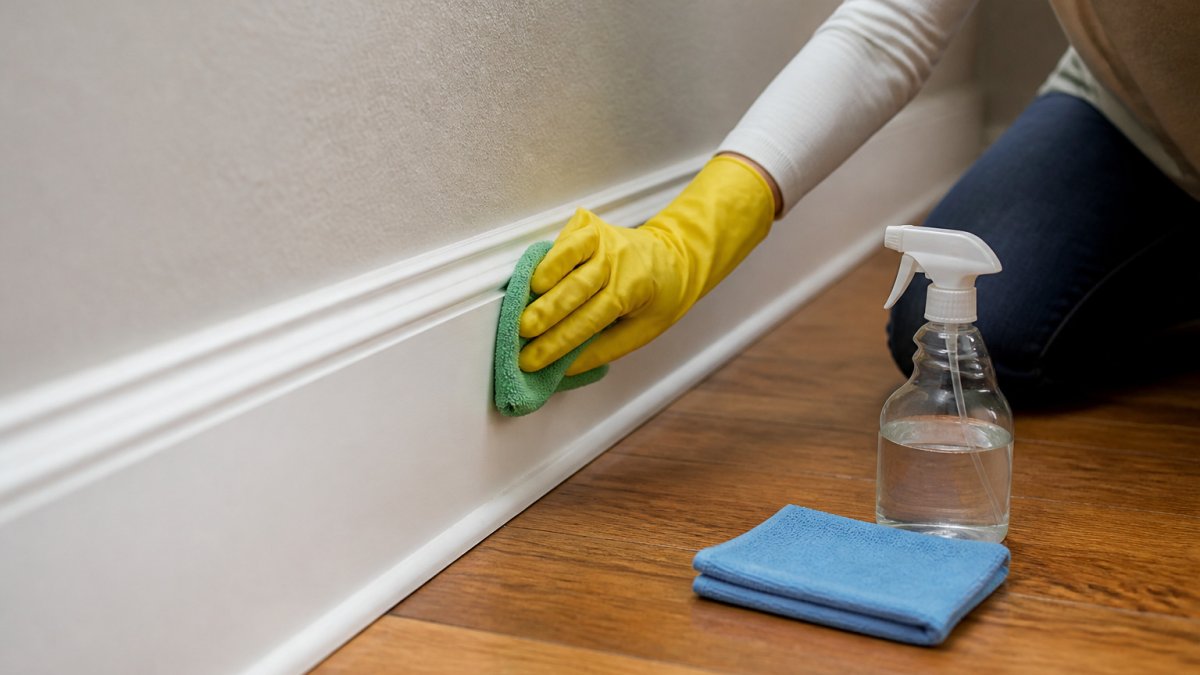
Damp cleaning removes dust instead of scattering it. A dry cloth or broom lifts particles into the air, where they settle on surfaces and get breathed in.

Household dust carries more than dirt. It collects tracked-in soil, pet dander, and residue from cleaning sprays and candles.
Try this routine:
Damp-wipe baseboards, windowsills, and shelves weekly
Wet-mop hard floors instead of sweeping
Use a vacuum with a HEPA filter on carpets
The shoes rule alone makes a difference. Whatever is on your driveway ends up in your carpet, and carpets hold onto it.
Natural Alternatives to Bleach for Home Cleaning
Bleach works, but it's harsh on lungs and surfaces. For everyday cleaning, simpler options handle the job. The most useful natural alternatives to bleach for home cleaning are vinegar, baking soda, castile soap, and hydrogen peroxide.
Here's the honest part: none of these disinfect like bleach. They clean well, and that's usually enough for a home.
Simple Recipes Using Vinegar and Baking Soda
All-purpose spray: 1 part white vinegar to 1 part water in a spray bottle
Scrub paste: 3 parts baking soda to 1 part water for sinks and tubs
Glass cleaner: 1 part vinegar to 4 parts water
Skip vinegar on natural stone, like marble or granite. The acid dulls the finish.
Watch Out Never mix vinegar and hydrogen peroxide in the same bottle. Combined in one container, they form a corrosive acid that can irritate skin and eyes. Use them separately, and rinse between.
Clear the Fragrance: Candles, Plug-Ins, and Dryer Sheets
Fragrance is one of the biggest hidden sources of chemical exposure at home. Scented candles, plug-ins, air fresheners, and dryer sheets release volatile organic compounds (VOCs) into the air. "Fragrance" on a label can stand for dozens of undisclosed chemicals.
The fix is simple. Remove the source.
Swap scented candles for unscented beeswax or soy candles
Replace plug-ins with open windows or a bowl of baking soda
Use wool dryer balls instead of dryer sheets
If you want a fresh-smelling home, the real answer is ventilation. Covering a smell doesn't remove it.
Swap Cookware, Food Storage, and Plastics
Nonstick coatings and some plastics can release chemicals into food, especially when heated. You don't have to replace everything at once. Start with the items you cook in most.
Cookware swaps:
Replace scratched nonstick pans with stainless steel or cast iron
Choose ceramic or glass baking dishes over metal with coatings
Avoid cooking acidic foods in old nonstick pans
Food storage swaps:
Move hot food into glass containers, not plastic
Never microwave food in plastic containers
Use glass or stainless steel water bottles
The microwave rule is the one people break most. Even "microwave-safe" plastic can release chemicals when hot.
Your Low-Tox Home Checklist, Room by Room
A low-tox home checklist works best when you go room by room instead of trying to fix everything at once. Here is what to tackle, in what order, plus the hazards that lifestyle swaps alone will not catch.
What to Replace First in Each Room
Room | Replace First | Why It Matters |
Kitchen | Scratched nonstick pans, plastic containers | Heat releases chemicals into food |
Bathroom | Scented sprays, vinyl shower curtain | Fragrance and VOCs build up in damp air |
Bedroom | Scented candles, old pillows | You breathe bedroom air for 8 hours |
Living room | Plug-ins, air fresheners | Constant low-level chemical release |
Laundry | Dryer sheets, scented detergent | Residue stays on clothes all day |
Start with the kitchen and bedroom. Those two rooms give you the biggest return for the least effort.
Test Before You Swap: The Hazards Lifestyle Tips Miss
No amount of vinegar and open windows will fix a radon problem, a gas leak, or lead paint. These are the four tests worth knowing about, roughly in order of how often they matter.
Radon. A colorless, odorless radioactive gas that seeps from soil into basements and lower floors. It is the leading cause of lung cancer among nonsmokers in the U.S., according to the EPA (the EPA). Test kits cost about $15 to $30 at hardware stores or online, and many state health departments give them away free. Test every two years, and after any major renovation. If levels are high, a mitigation system typically runs $800 to $2,500 installed.
Carbon monoxide. Any fuel-burning appliance (gas furnace, water heater, stove, fireplace) can produce it. Install a CO alarm on every level of the home and outside sleeping areas. Combination smoke and CO alarms cost about $25 to $50. Replace the unit every 5 to 7 years, not just the batteries.
Lead paint. Homes built before 1978 may have lead paint (the EPA). Assume it is present until a certified inspector says otherwise. Do not sand, scrape, or dry-scrape painted surfaces. A certified lead inspector or risk assessor can test paint, dust, and soil. If you rent, your landlord is generally required to disclose known lead hazards under federal law.
When to Call a Professional
DIY testing handles radon, CO, and humidity well. Call a licensed or certified professional when:
Radon test results come back high and you need a mitigation system designed and installed.
You suspect lead paint and plan to renovate, sand, or replace windows in a pre-1978 home.
Mold covers more than about 10 square feet, or you smell it but cannot find it.
A Simple Order of Operations
Test the invisible hazards first: radon, CO, and lead if the home predates 1978.
Fix moisture and ventilation, since damp air feeds mold and concentrates VOCs.
Clean with damp methods and fragrance-free products.
Swap cookware, food storage, and plastics as items wear out.
Replace furnishings and finishes last, when budget allows.
Pro Tip If you only do one thing this month, buy a radon test kit and a CO alarm. They cost less than a single nonstick pan set and address hazards that cleaning and ventilation cannot touch.
Affordable Ways to Create a Healthier Home
You don't need a big budget to create a healthier home. Most of the highest-impact changes cost little or nothing. Ventilation is free. Vinegar and baking soda cost a few dollars and replace a shelf of specialty sprays. What most guides skip is how to read a label before you spend anything at all.
How to Read a Product Label Before You Buy
Ingredient lists on cleaning and personal care products are not always complete, but they still tell you a lot. Here is what to look for, in order of usefulness.
"Fragrance" or "parfum" as a single line item. Under federal labeling rules, this one word can stand in for a mixture of dozens of undisclosed chemicals. If a product lists fragrance and you are trying to reduce exposure, treat it as a black box.
"Antibacterial" or "kills 99.9% of germs." These claims usually mean an added active pesticide ingredient. For routine home cleaning, plain soap and water or a vinegar solution handles most jobs.
Signal words: DANGER, WARNING, CAUTION. These are required by federal law and rank hazard from most to least severe. DANGER means the smallest amount can hurt you. CAUTION is the mildest. This is one of the few label elements that is standardized and enforced.
A practical rule: if you cannot find an ingredient list at all, that is itself information. Reputable brands publish one.
A Phased Plan That Starts Free
Month 1 (no cost): Open windows daily, run exhaust fans every time you cook or shower, leave shoes at the door, and stop buying scented candles and plug-ins.
Month 2 (under $20): Switch to vinegar, baking soda, and castile soap for everyday cleaning. Drop dryer sheets for wool dryer balls. Read the labels on the products you already own and finish the ones you have before replacing them.
Month 3 ($30-$80): Replace scratched nonstick pans with one stainless steel or cast iron skillet. Move hot food into glass containers. Swap plastic water bottles for stainless steel.
Prioritize by Your Situation
The same checklist does not fit every household. A few common patterns:
Renters: You usually cannot replace flooring, appliances, or paint. Focus on what moves with you: ventilation habits, cleaning products, cookware, bedding, and a portable HEPA air cleaner.
Families with young children: Children crawl on floors and put objects in their mouths, so floor cleaning, dust control, and lead paint awareness matter more than fragrance swaps.
People with asthma or allergies: Ventilation, HEPA filtration, mold and moisture control, and dust mite covers on bedding tend to give the biggest relief.
Buying organic food helps too, but it is not the first step. Focus on air and surfaces first, then products you apply to your body or breathe directly.
If the work feels like too much, professional help is an option. Janicemariecleaningservices uses primarily all-natural supplies, so your home gets a deep clean without added chemicals. We offer same-day estimates and flexible service options for busy households.
Key Takeaway Air first, surfaces second, products third. Ventilation and damp cleaning remove more chemical exposure than any single product swap, and they cost almost nothing. Read labels before you spend, and match your priorities to your household rather than a generic list.
Frequently Asked Questions
What are the most toxic things in our homes?
The biggest sources of chemical exposure in most homes are fragranced products like air fresheners, scented candles, and dryer sheets; cleaning products with harsh ingredients; nonstick cookware; and plastic food containers heated in the microwave. Volatile organic compounds (VOCs) also come from paint, new furniture, and building materials. You do not need to remove everything at once. Start with the products you use daily, since repeated small exposures add up more than one-time purchases.
What should I replace first to make my home less toxic?
Start with the items you use every day: swap fragranced air fresheners and plug-ins for ventilation and baking soda, replace nonstick pans with stainless steel or cast iron, and move food out of plastic containers into glass. These changes are usually the cheapest and have the fastest impact. After that, tackle cleaning products and personal care items. A low-tox home checklist organized room by room helps you prioritize without feeling overwhelmed.
How can I reduce dust and chemical exposure at home?
Damp dusting and wet mopping remove dust instead of pushing it into the air, unlike dry dusting or sweeping. Use a damp microfiber cloth on surfaces, baseboards, and blinds weekly. Wash bedding in hot water, vacuum with a HEPA filter, and leave shoes at the door to stop tracked-in contaminants. Pair these habits with regular ventilation by opening windows or running a ventilation fan, and you will cut both dust and chemical residue in the air.
Are natural cleaning products always safer?
Not automatically. Natural alternatives to bleach for home cleaning, like vinegar and baking soda, are generally gentler, but some plant-based products still contain fragrances or essential oils that can irritate sensitive people or pets. Read labels and look for specific ingredient lists rather than trusting the word natural. For tough jobs, match the product to the surface. If you want certainty, a professional service that uses primarily all-natural supplies can handle the details for you.
The hardest part isn't knowing what to change. It's finding the time to do it consistently. Janicemariecleaningservices can help. We bring over two decades of experience, primarily all-natural supplies, and a detail-focused approach to every home. Our flexible service options and same-day estimates make it easy to start. Call or email for a free estimate at 1-612-203-1686 and get a safer, cleaner home without the guesswork.
Comments