


What to Expect From Professional Cleaners: 7 Steps

Last Updated: November 2, 2026
Quick Summary
Professional cleaners start with a walkthrough to confirm the scope, then clean room by room, dusting from the top down before vacuuming and mopping the floors last. Recurring visits typically cover dusting, bathrooms, kitchen surfaces, floors and trash removal, with add-ons billed separately. Before booking, verify insurance and screening with a written certificate of insurance.
Ask for a written task list before the first visit to compare results against it.
Standard recurring visits typically cover dusting, bathrooms, kitchen surfaces, floors and trash removal.
Dust from the top down so surfaces cleaned last stay clean.
Request a current certificate of insurance and confirm the named insured and policy dates.
Use the phone number on the certificate to confirm the policy is active.
Table of Contents
Hiring a professional cleaner can feel like a leap of faith, especially if your last service missed the baseboards or left a streaky fridge. A good cleaning service should make clear what happens in your home before a crew walks through the door.
Professional cleaning means a trained team follows a defined task list, uses set methods and supplies, and finishes to a consistent standard. It's a repeatable service, not a favor from a friend.
What Professional Cleaners Do During a Visit
Many professional cleaning visits start with a short walkthrough, where the lead cleaner checks the home and confirms the scope. Crews often work room by room, starting high and moving low so dust falls onto surfaces cleaned last.
Many visits follow a clear rhythm:
Walkthrough and scope check before cleaning starts
Dusting from the top down
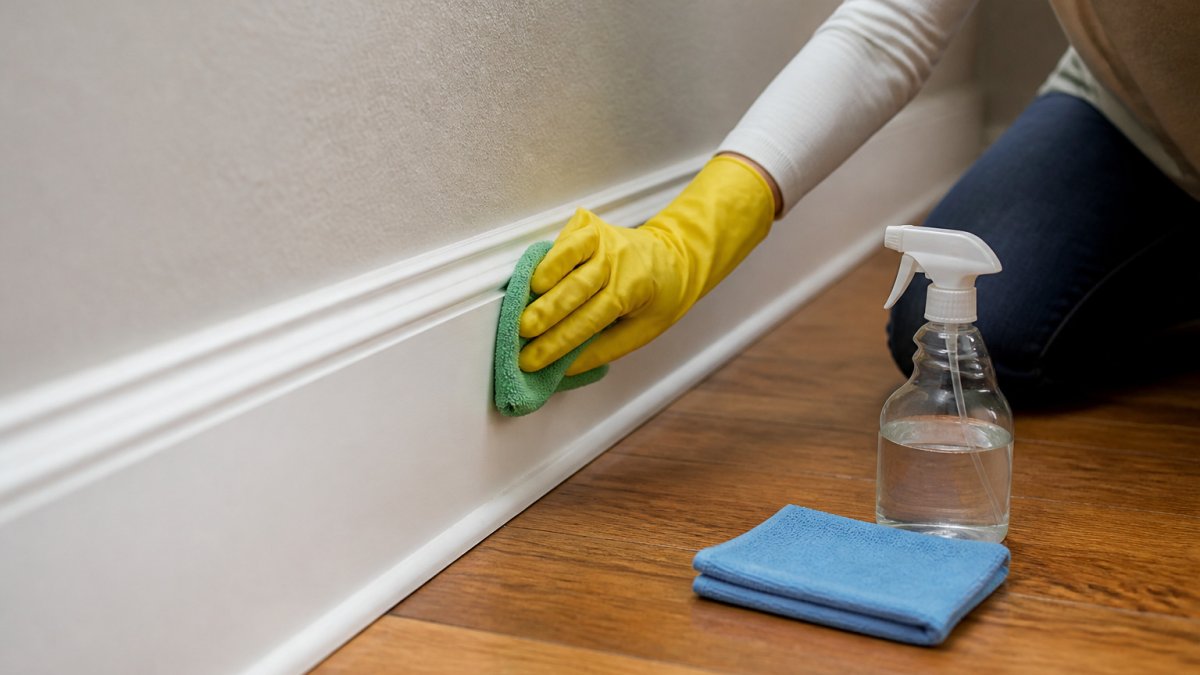
Surface cleaning in kitchens and bathrooms
Watch out: Ask for a written task list before the first visit so you can compare results against it.
The article breaks a typical visit into a short sequence of steps, which are summarised below.
Step | What happens | Note |
Walkthrough | Lead cleaner checks the home and confirms scope | Before cleaning starts |
Dusting | Dust from the top down | Surfaces cleaned last are safest |
Surface cleaning | Kitchens and bathrooms | Done before floors |
Floor cleaning | Vacuuming and mopping | Final step |
What Is Included in a House Cleaning
A house cleaning covers the everyday work that keeps a home sanitary and comfortable. Recurring visits usually include dusting, vacuuming, mopping, bathroom cleaning, kitchen surface cleaning, and trash removal, but confirm the exact list before booking. See the full recurring house cleaning task list for what a standard visit covers.
For a standard recurring visit, the task list typically covers:
Dusting accessible surfaces, furniture, and light fixtures
Cleaning bathroom sinks, toilets, tubs, showers, and mirrors
Wiping kitchen counters, stovetops, and the outside of appliances
Standard Tasks Versus Add-On Services
Standard tasks keep a home maintained week to week. Larger or less frequent jobs are often handled as add-ons, and move-in/move-out or one-time deep cleans generally go further than a routine visit, so expect a longer list and a different scope. Review the detailed move-in/move-out cleaning inclusions before comparing.
Compare the two before you book, and confirm any add-on in writing so there are no surprises on the invoice. See what a one-time deep clean covers to weigh it against standard cleaning.
How to Prepare for House Cleaners
Preparation can help a visit run smoothly. You don't need to deep clean before the crew arrives. A few simple steps help them focus on the work you actually want done.

Clear counters and floors of personal items and clutter
Secure valuables, medications, and important documents
Put away pet bowls, toys, and bedding
How Long a House Cleaning Takes
Cleaning time depends on home size, number of rooms, condition, and service type.
Visit length generally varies by service type: recurring visits are usually shorter and focused on maintenance, first-time cleans take longer, and deep or move-out cleans take the longest.
Ask the company for an estimated time after the walkthrough. A reputable provider can explain why a job will take as long as it does.
Verifying Insurance, Screening, and Bonding
Trust matters when someone you don't know works in your home. Verifying insurance, screening, and bonding is a sensible way to protect yourself, but "we're insured" is not proof. Ask every provider for documents, then confirm they are real and current.
What Each Coverage Actually Protects
The terms get used interchangeably, but they cover different risks. Ask which policies the company carries and get the details in writing.
General liability insurance: Covers third-party bodily injury and property damage the cleaning company causes while working in your home, a broken mirror, a scratched hardwood floor, a stained upholstered chair. It typically does not cover the cleaner's own injuries or the company's own equipment.
Workers' compensation: Covers medical costs and lost wages if an employee is injured on your property. Ask whether the company carries workers' comp or classifies its cleaners as independent contractors.
Bonding: A fidelity bond can reimburse you for theft or dishonesty by a bonded employee, up to a stated limit. Bonding is not liability insurance and does not cover accidental damage. Ask for the bond amount and who holds it.
A homeowner's policy is not a substitute for the cleaner's coverage. Filing a claim against your own policy for a cleaner's mistake can raise your premium or count against your claims history. Confirm the provider's coverage before the first visit, not after an incident.
How to Verify a Certificate of Insurance
A certificate of insurance (COI) is a one-page summary an insurer or broker issues to show that a policy exists. It is not the policy itself, but it is the fastest way to confirm coverage. Follow these steps:
Request the COI in writing. Ask the company to email a current certificate for general liability and, if applicable, workers' comp and commercial auto. A legitimate provider sends it without hesitation.
Check the named insured. The name on the certificate must match the company you are hiring, not a similar-sounding LLC, not an individual cleaner's personal name if you hired a company.
Check the policy dates. Confirm the effective and expiration dates cover your scheduled visit. A certificate that expired last month proves nothing.
Check the limits. Look at the general liability limit per occurrence and the aggregate. Ask the company to explain whether those limits are adequate for the size of your home and the work being done.
Call the insurer or broker. Use the phone number printed on the certificate, not a number the cleaner gives you, and ask the insurer to confirm the policy is active and the named insured matches. This one call closes most of the verification gap.
Ask to be listed as a certificate holder. For recurring service, request that your name and address be added as a certificate holder so the insurer notifies you if the policy lapses or is canceled.
Keep a copy of the COI with your service contract. If the company changes insurers mid-year, ask for an updated certificate before the next visit.
Screening and Background Checks
Background screening varies widely. Some companies run county, state, and national criminal checks plus sex-offender registry searches; others run only a basic identity check; some use no formal screening at all. Ask what the check covers, how often it is repeated, and whether it applies to every cleaner who enters your home, including substitutes and subcontractors.
A few practical questions:
Are all cleaners employees of the company, or are some independent contractors or subcontractors?
Does the company run background checks on every person who will enter my home, including fill-in cleaners?
How does the company handle key access, alarm codes, and lockbox information?
Independent Cleaners Versus Companies
An independent cleaner may carry general liability insurance, but many do not carry workers' comp or a bond. If you hire an individual directly, ask for the same documents you would ask a company for, and confirm whether their homeowner's or renter's policy, if any, would respond to damage in your home. A company that employs its cleaners and carries all four coverages is generally the lower-risk choice, even at a higher hourly rate.
What to Do If Something Goes Wrong
Even careful providers have incidents. Knowing the process in advance keeps a small problem from becoming a dispute.
If property is damaged: Photograph the damage before anything is moved, note the date and the cleaner's name, and report it to the company in writing the same day. Ask for the claim process and the name of the insurer. Keep receipts or estimates for repair or replacement.
If something is missing: Report it in writing immediately and ask the company to check its internal process. A bonded company will have a theft-claim procedure; ask for it before you book so you know what to expect.
If a cleaner is injured: Do not move the person or attempt medical care beyond basic first aid; call 911 if needed. Notify the company immediately and document what happened. If the company carries workers' comp, the claim goes through its insurer, not yours.
Verification is a five-minute task: request the COI, confirm the named insured and dates, call the insurer using the number on the certificate, and ask whether every cleaner is screened. A provider that cannot or will not supply those documents is telling you something important.
Questions to Ask a Cleaning Service Before Booking
A short list of questions can reveal a lot about a provider, but the questions need to be specific enough to produce useful answers. The list below is organized around the decisions you will actually make: who enters your home, what they will do, what happens if something goes wrong, and what the contract commits you to.
Who Will Be in Your Home
Are your cleaners employees or independent contractors? If contractors, who supervises them and who insures them?
Do you use subcontractors or fill-in cleaners? If so, are they screened and insured the same way as your regular staff?
Do you run background checks on every cleaner, and what do those checks cover?
What the Service Covers
Can you send a written task list for a standard visit before I book?
What is included in the base price, and what is billed as an add-on (inside oven, interior windows, inside fridge, baseboards, laundry, dishes)?
What products and equipment do you use, and can I request fragrance-free, pet-safe, or specific products?
Insurance, Bonding, and Claims
Are you licensed, bonded, and insured? Can you email a current certificate of insurance?
Does the certificate name the company I am hiring, and does it cover the dates of my service?
Do you carry workers' compensation, or are your cleaners classified as independent contractors?
Pricing, Quotes, and Contract Terms
Is the quote flat-rate or hourly? If hourly, what is the minimum billable time?
What is the cancellation and rescheduling policy, and is there a fee?
For recurring service, what is the notice period to pause or cancel, and does the rate change after the first clean?
Ask for the quote and the contract terms in writing before the first visit. Compare at least two providers on scope, not just headline price, a lower hourly rate with a longer minimum or a shorter task list can cost more per clean.
How to Compare Quotes Side by Side
Headline price is the least useful number in a cleaning quote. Build a simple comparison using the same categories for each provider:
Scope: Which rooms and tasks are included? Is the task list written?
Time: Is the estimate flat-rate or hourly, and what is the minimum?
Supplies and equipment: Included, or billed separately?
A provider that answers every category in writing is easier to hold to the same standard as the next one. A provider that answers vaguely on insurance, screening, or contract terms is the one to drop from your shortlist.
Red Flags in the Answers
Refuses to send a certificate of insurance or says "we're covered" without documents.
Cannot say whether cleaners are employees or contractors.
Will not put the task list or price in writing.
Use the same question list for every provider and keep the written answers. The comparison is only fair when each company answers the same questions, and the written record is what you rely on if a dispute arises later.
Booking Your Free Estimate and First Cleaning
Once you've compared providers, the next step is a free estimate. Contact Janice Marie's Cleaning Services by phone or email to request one. A good estimate includes a walkthrough or a detailed description of your home, a written task list, and a clear price.
You can request a free estimate by calling or emailing us at 1-612-203-1686. Review our pricing on the website for current options before you request an estimate.
Frequently Asked Questions
What do professional cleaners do during a house cleaning?
Professional cleaners typically work through a set checklist covering kitchens, bathrooms, dusting, floors, and surfaces. Most crews start at the top of a room and work down, so dust and debris settle onto areas they have not yet cleaned. Ask the company for its written checklist before the first visit so you know exactly which tasks are included and which are add-ons, such as inside the oven, interior windows, or inside the refrigerator.
Do I need to be home when professional cleaners come?
You do not have to be home, but many homeowners prefer to be present for the first visit so they can walk through the results and point out priorities. Many companies work with a lockbox or key arrangement, which should be agreed on in writing. If you are not home, confirm how the crew will access the house, where to leave instructions, and how to reach the company if something needs attention.
What should I do if I am not satisfied with a cleaning?
Contact the company within a reasonable window, usually the same day or the next, and describe specifically what was missed, such as baseboards or bathroom grout. Take clear photos and check your service agreement for the company's satisfaction policy before you request a return visit.
Booking tip: Ask for a written estimate with the task list, the price, and the cancellation policy. That single document makes comparing providers much easier.


Comments