


Deep Cleaning vs Recurring Cleaning: Key Differences

Table of Contents
Last Updated: October 12, 2026
Deep Cleaning vs Recurring Cleaning: What Actually Changes
The difference between deep cleaning and recurring cleaning comes down to one word: baseline.
Here's the part most guides skip: deep cleaning is not "recurring cleaning but better." It's a different job with a different scope, a different time commitment, and a different price.
Below, we break down exactly what changes between the two, room by room, so you can pick the right service the first time.
Side-by-Side Comparison: Scope, Time, and Frequency
Recurring cleaning is scheduled maintenance that keeps an already-clean home at its current standard. Deep cleaning is a one-time or occasional reset that removes accumulated dirt, built-up grime, and buildup in overlooked areas. The table below shows how they differ across the factors that actually affect your booking.
Factor | Recurring Cleaning | Deep Cleaning |
Purpose | Maintain an existing baseline | Reset a home that has fallen behind |
Frequency | Weekly, biweekly, or monthly | Every 3-6 months, or one-time |
Time on site | Shorter, predictable visits | Longer, often double a routine visit |
Scope | Surfaces, floors, fixtures, dusting | Everything in routine, plus buildup and detail work |
Best for | Homes already at a good standard | First-time cleans, post-move, seasonal resets |
Cost per visit | Lower | Higher, reflects extra time and labor |
The pattern is consistent: recurring cleaning protects cleanliness, and deep cleaning creates it.
What Is Included in a Deep Cleaning (Room by Room)
A deep cleaning covers everything a routine visit does, plus the detail work that routine visits skip by design. That means baseboards, vents, appliance interiors, behind furniture, and the nooks and crannies that collect dust between regular cleanings.

Kitchen and Bathroom: Where Deep Cleaning Does the Most Work
These two rooms absorb most of the extra time, and for good reason. Both accumulate grease, soap scum, and grime faster than any other space in the home.
Inside the oven, refrigerator, and microwave
Cabinet fronts, handles, and the tops of upper cabinets
Backsplash degreasing and sink scrubbing
Bedrooms, Living Areas, and Overlooked Spots
Bedrooms and living areas look clean faster than they get clean. Dust hides under furniture, along baseboards, and on ceiling fans long before it's visible from the doorway.
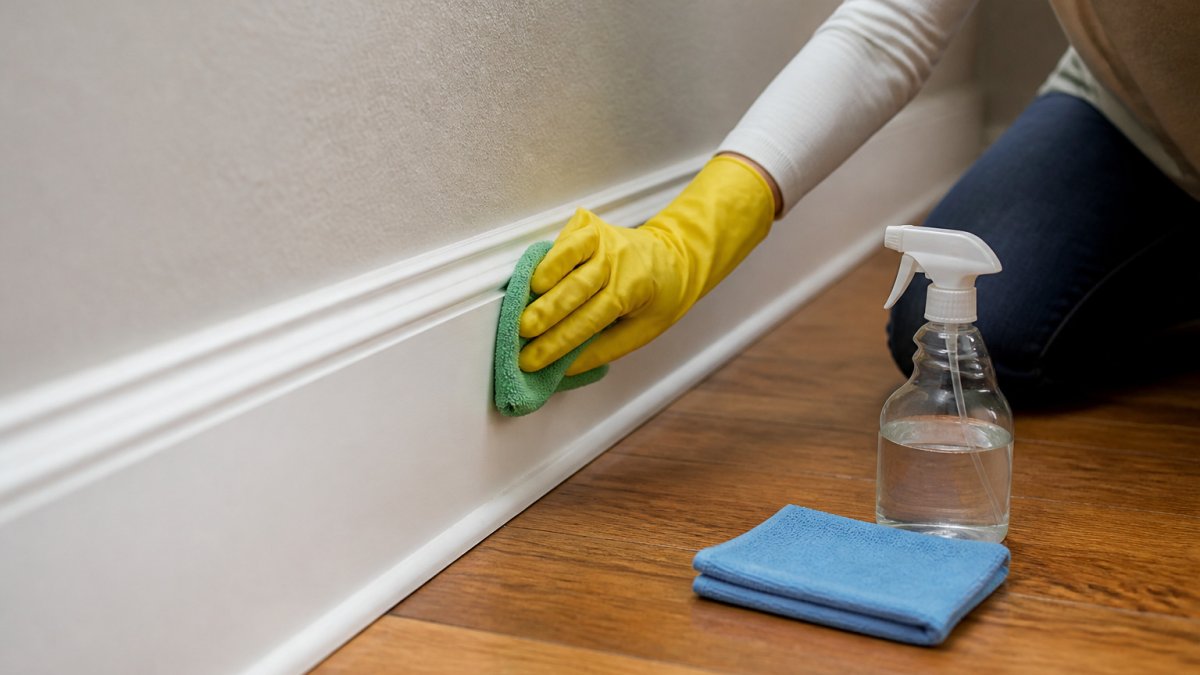
Baseboards, door frames, and light switches
Ceiling fans, vents, and light fixtures
Under and behind furniture
Pro Tip Ask your cleaner to photograph the "before" state of high-reach areas like the fridge top and vent covers. It's the fastest way to confirm the deep clean actually happened, and it gives you a reference point for what recurring visits should maintain.
Regular House Cleaning Checklist: What Recurring Visits Cover
A regular house cleaning checklist covers the surfaces, floors, and fixtures your household touches daily. Recurring visits are built for speed and consistency, so they focus on the areas that get dirty every week rather than the buildup that takes months to form.
Vacuuming and mopping all floors
Dusting reachable surfaces, shelves, and furniture
Kitchen counters, sink, stovetop, and appliance exteriors
What's deliberately excluded: inside appliances, baseboards, vents, and behind heavy furniture. Those tasks belong to deep cleaning, and skipping them is what keeps a recurring visit affordable and repeatable.
How Often to Schedule House Cleaning for Your Situation
Most homes do best with recurring cleaning every two weeks and a deep clean every three to six months. That cadence keeps the baseline intact without paying reset prices for maintenance work. But the right answer depends on two things: how fast your household generates dirt, and what just happened in your home. The scenarios below map common situations to the service that fits.
Scenario Guide: Which Service, and When
Situation | First Service | Then |
Moving into a new home | Deep clean before furniture arrives | Recurring every two weeks |
Moving out / rental turnover | Deep clean after belongings are out | None, unless the lease continues |
Post-renovation (drywall dust, paint prep) | Deep clean, often with a construction-dust add-on | Recurring once dust settles |
Hosting guests or a holiday | Deep clean 2-3 days before | Recurring resumes on normal schedule |
Home already professionally maintained | Recurring only | Deep clean every 3-6 months |
Home not cleaned professionally in over a year | Deep clean first | Recurring every two weeks |
New pet in the home | Deep clean to reset dander | Recurring weekly or biweekly |
Allergy-sensitive household | Deep clean before each seasonal change | Recurring weekly |
Matching Frequency to Household Type
Busy professionals, no pets or kids: Biweekly recurring cleaning usually holds the line. A deep clean twice a year covers the buildup.
Families with young children: Weekly or biweekly recurring visits, with a deep clean every three to four months.
Pet owners: Biweekly at minimum. Pet dander and hair settle into baseboards and vents faster than most people expect.
The Reset-to-Maintenance Transition
A common scheduling mistake is treating deep cleaning and recurring cleaning as competing options instead of sequential ones. The practical sequence is:
Book the deep clean first if the home hasn't had one in over a year, or if a major event (move, renovation, new pet) changed the dirt load.
Wait for the deep clean to be completed before starting recurring service, scheduling them back-to-back on the same day defeats the purpose.
Start recurring service within two to four weeks of the deep clean, while the baseline is still intact.
Re-book a deep clean every three to six months, or sooner if the household changes (new pet, new baby, seasonal allergies).
How to Prepare for a First Deep Clean
A deep clean goes faster and reaches more when the home is ready for it:
Declutter surfaces so cleaners can reach baseboards, counters, and floors without moving personal items.
Secure pets for the duration of the visit, deep cleans run long, and doors and windows may be open for ventilation.
Clear the areas around add-on tasks (inside the oven, inside the fridge) so those can be done without delay.
Watch Out Skipping the initial deep clean on a home that hasn't had one in over a year is a common booking mistake. The recurring cleaner spends the first several visits catching up on buildup instead of maintaining, and the home never quite hits the standard you're paying for.
Key Takeaway Use the scenario guide to pick your starting service, then follow the reset-to-maintenance sequence: deep clean first, recurring service within a month, and a fresh deep clean every three to six months.
Deep Cleaning Cost: What Drives the Price Up or Down
Deep cleaning costs more per visit than recurring cleaning because it takes more time, more labor, and more supplies. There's no single flat rate, and any company quoting one without seeing your home is guessing. What we can tell you is exactly what moves the number, and roughly how much time each factor adds.
Time Is the Real Unit of Cost
Most residential cleaning companies price by the hour or by a flat rate built from an estimated number of labor hours. That means the honest way to understand a deep cleaning quote is to understand what adds hours to the visit.
Factor | Typical Effect on Visit Time |
Home size (square footage and room count) | The largest single driver, a 3-bed/2-bath takes meaningfully longer than a 1-bed/1-bath |
Current condition and buildup | A home not professionally cleaned in a year can take 1.5-2x the time of a maintained home |
Number of bathrooms | Bathrooms are the most labor-intensive room per square foot, grout, tile, and fixtures |
Pets | Hair and dander settle into baseboards, vents, and upholstery, adding detail time |
Add-ons (inside oven, inside fridge, interior windows, laundry) | Each add-on adds a discrete block of time to the visit |
Frequency commitment | Recurring clients typically pay less per visit than one-time deep clean bookings |
A common pattern is that a first-time deep clean on a home that hasn't been serviced in over a year runs roughly double the time of a routine visit on the same square footage.
How to Compare Quotes Fairly
Two quotes for the "same" deep clean can differ by hundreds of dollars because they cover different scopes. Before comparing numbers, confirm:
Is the quote hourly or flat-rate? Flat-rate quotes should be tied to an estimated hour count. Ask for it.
What's the estimated time on site? A quote with no time estimate is a quote you can't evaluate.
Which add-ons are included vs. extra? Inside oven, inside fridge, and interior windows are the most commonly excluded items.
Why We Don't Publish a Flat Rate
A flat published rate forces companies to either overcharge small, maintained homes or under-deliver on large, neglected ones. The honest answer on cost is that it depends on your home. Janicemariecleaningservices offers same-day estimates so you get a real number based on your actual space. When you request an estimate, have your square footage, bedroom and bathroom count, and a rough sense of when the home was last professionally cleaned, those three details get you the most accurate number fastest.
Pro Tip Ask for the estimate in writing with the scope listed line by line. A written scope is what protects you if a task you expected turns out to be an add-on.
Service Boundaries, Exclusions, and Add-Ons to Ask About
Every cleaning company draws a line somewhere, and the good ones tell you where before you book. Ask these questions upfront and you'll avoid the awkward conversation on cleaning day.
Is interior window cleaning included or an add-on?
Does the deep clean cover inside the oven and refrigerator, or is that extra?
Are exterior windows, garages, and patios in scope?
At Janicemariecleaningservices, we use primarily all-natural cleaning supplies and equipment, which matters if you have pets, young children, or chemical sensitivities. Ask any company what products they use and whether they'll send you the list before the first visit.
Key Takeaway The clearest way to choose: if your home is already at a standard you're happy with, book recurring cleaning to protect it. If it's been months since a proper reset, book a deep clean first, then transition to recurring service.
Conclusion: Choosing the Right Service for Your Home
The choice between deep cleaning and recurring cleaning isn't really a choice at all for most homes. You need a deep clean to establish the baseline, then recurring cleaning to hold it.
If you're in Minneapolis, St. Paul, or Bloomington and you're not sure which service fits your home, Janicemariecleaningservices can help. We bring over two decades of experience, primarily all-natural supplies, a personalized booking process, and same-day estimates to every job.
Frequently Asked Questions
What is the difference between regular cleaning and deep cleaning?
Regular cleaning maintains a home that is already in good shape: vacuuming, mopping, dusting, wiping countertops, and cleaning fixtures on a set schedule. Deep cleaning is a one-time reset that removes accumulated dirt and built-up grime from areas routine visits skip, such as baseboards, vents, inside appliances, and behind furniture. Recurring cleaning keeps the baseline; deep cleaning rebuilds it when the home has fallen behind.
Should I get a deep clean before starting recurring cleaning?
Most homes benefit from one deep clean first. It brings the house to a clean baseline, so recurring visits can maintain that level instead of spending each visit catching up on old buildup. If your home is already well maintained, you can start recurring service right away. Ask your provider whether the first visit is priced as a deep clean or a standard clean.
How often should you schedule recurring house cleaning?
Weekly service suits busy households, homes with pets or young children, and anyone with allergies. Every two weeks is the most common choice and keeps most homes consistently clean. Monthly visits work for lighter-use homes or solo occupants. A deep clean every three to six months, with recurring cleaning in between, keeps hard-to-reach areas from building up again.
Is deep cleaning more expensive than recurring cleaning?
Yes, a deep clean costs more per visit because it takes longer and covers more tasks, including inside appliances, baseboards, vents, and detailed scrubbing. Recurring cleaning costs less per visit because the work is maintenance on an already-clean home. Many households pair one deep clean with ongoing recurring service, which spreads the cost of upkeep across the year.
How long does a deep cleaning take compared with a regular cleaning?
A deep clean typically takes two to three times longer than a standard visit because of the extra scrubbing, detail work, and hard-to-reach areas involved. A recurring clean on a maintained home usually takes a few hours, depending on square footage and the number of bathrooms. First-time deep cleans on homes that have gone months without service take the longest.
Choosing the wrong cleaning service means either overpaying for maintenance you don't need or watching your home slide backward between visits. Janicemariecleaningservices builds the right plan for your household from the first estimate, with primarily all-natural supplies, a personalized booking process, and flexible scheduling that adapts when your week changes. Get started with Janicemariecleaningservices and get a same-day estimate for a home that stays at the standard you set.

Comments