


Non Toxic Cleaning for Pets: A Step-by-Step Guide

Table of Contents
What You'll Need Before You Start
Step 1: Identify Toxic Cleaning Ingredients to Avoid for Pets
Ingredients That Hit Dogs and Cats Differently
"Eco-Friendly" Does Not Mean Pet-Safe
Step 2: Choose Natural Alternatives to Bleach for Home Cleaning
Mixing Rules That Keep Solutions Safe
Step 3: Make a DIY Pet Safe Floor Cleaner
Step 4: Handle Pet Accidents With Enzymatic Cleaners
Step 5: Ventilate and Monitor After Non Toxic Cleaning
How Long to Keep Pets Out
A Room-by-Room Protocol
What to Watch For After Pets Return
Airflow Tools That Actually Help
When to Skip Cleaning Entirely
If Your Pet Ingests a Cleaner: Immediate Steps
Conclusion
Frequently Asked Questions
Last Updated: October 2, 2026
What You'll Need Before You Start
Non toxic cleaning for pets starts with a simple rule: if you would not want it on your hands, do not put it on your floors. Dogs and cats live at ground level. They walk on your floors, then lick their paws. Whatever you clean with ends up inside them.
Gather these basics first:
Distilled white vinegar
Baking soda (sodium bicarbonate)
Hydrogen peroxide (3% solution)
A pH-balanced liquid castile soap
Enzymatic cleaners for pet accidents
Microfiber cloths and a mop
Spray bottles and a bucket
Gloves and a scrub brush
Step 1: Identify Toxic Cleaning Ingredients to Avoid for Pets
The fastest way to protect your pet is to read labels and put back anything with these ingredients. Toxic cleaning ingredients to avoid for pets fall into a few clear groups.
Other ingredients to avoid:
Ammonia, found in glass cleaners; the fumes irritate a pet's lungs, and the scent can trigger re-marking in pets with urine habits
Bleach, harsh on paws and dangerous if swallowed; it also reacts with other common cleaners to form toxic gas
Phthalates and synthetic fragrance, linked to skin and breathing issues; "fragrance" on a label can hide dozens of undisclosed compounds
Volatile organic compounds (VOCs), fumes that build up indoors, especially in homes with poor air exchange
Essential oils, including tea tree, citrus, peppermint, eucalyptus, and wintergreen; these are risky for cats and dogs at different thresholds
Quaternary ammonium compounds (quats), common in "antibacterial" sprays and wipes; they leave residue on floors and are a frequent cause of paw irritation
Glycol ethers, found in some multi-surface sprays; they are linked to respiratory irritation in small animals
Ingredients That Hit Dogs and Cats Differently
Cats and dogs do not react to the same chemicals the same way. The core reason is liver chemistry: cats have very low activity of certain glucuronosyltransferase enzymes, the pathway that attaches a sugar molecule to a toxin so it can be flushed out in urine or bile. Without it, phenols, many essential oils, and several chemical compounds accumulate, while dogs clear many of the same substances faster.
Phenols and pine-based cleaners: high risk for cats, lower but real risk for dogs
Essential oils (tea tree, citrus, peppermint, eucalyptus): cats are far more sensitive; even diffused oils can cause drooling, wobbliness, or liver stress. Dogs tolerate some oils but still react to concentrated or ingested amounts
Permethrin and pyrethrin-based products: often used in flea and yard products; cats are highly sensitive, dogs far less so
Bleach and ammonia fumes: both species react, but cats in smaller rooms with less air exchange show signs faster
Ethanol and isopropyl alcohol: both species can be affected; cats again clear it more slowly
"Eco-Friendly" Does Not Mean Pet-Safe
A label that says "green," "natural," or "plant-based" is not a safety claim. Several plant-derived ingredients are among the most dangerous for pets:
Citrus oils (d-limonene, linalool): common in "natural" degreasers and air fresheners; toxic to cats, and risky for dogs in concentrated form
Tea tree oil (melaleuca): marketed as a natural disinfectant; causes drooling, tremors, and weakness in cats at small doses
Pine and eucalyptus oils: natural, pleasant-smelling, and a known phenol source
Clove and cinnamon oils: often blended into "fall" or "holiday" cleaners; irritating to skin and mucous membranes
Watch Out Never mix bleach with ammonia or vinegar. The result is toxic gas that can harm pets and people fast. The same applies to bleach plus any acid-based cleaner, including many "natural" citrus sprays. If you are unsure whether two products can mix, use them on different days.
Step 2: Choose Natural Alternatives to Bleach for Home Cleaning
Natural alternatives to bleach for home cleaning are safer for paws, noses, and lungs, and work just as well on everyday messes. Bleach is overkill for most homes.
Your core toolkit:
Distilled white vinegar, cuts grease and light grime on hard surfaces
Baking soda, a gentle abrasive scrub for sinks and tubs
Hydrogen peroxide (3%), breaks down stains and some odors
Castile soap, a mild all-purpose cleaner when diluted
Lemon juice, a mild deodorizer, used in small amounts
Mixing Rules That Keep Solutions Safe
Follow these rules so your homemade cleaners stay safe:
Never combine vinegar and hydrogen peroxide in the same bottle
Add baking soda to vinegar only in an open sink, never a sealed container
Keep essential oils out of any mix your pet can reach
Label every bottle with what is inside and the date you made it
Make small batches you will use within a week
A common mistake is doubling the vinegar "to make it stronger." More acid does not clean better. It just leaves more surface residue for paws to pick up.
Step 3: Make a DIY Pet Safe Floor Cleaner
A DIY pet safe floor cleaner takes about two minutes to mix and works on most hard floors. Here is a recommended recipe.

You will need:
1 cup distilled white vinegar
1 gallon warm water
1 teaspoon pH-balanced castile soap
A mop and a clean bucket
Steps:
Fill the bucket with the gallon of warm water.
Add the vinegar and stir.
Add the castile soap last and stir gently.
Mop as usual, working in small sections.
Let the floor dry fully before pets walk on it.
Pro Tip Test any new floor cleaner on a hidden spot first. Vinegar can dull some stone and waxed surfaces. A 30-second test saves a costly repair.
Step 4: Handle Pet Accidents With Enzymatic Cleaners
Enzymatic cleaners are the right tool for pet accidents. They use enzymes and microbes to break down the source of the smell, not just cover it.
How to use an enzymatic cleaner:
Blot up as much of the mess as you can with a cloth.
Apply the enzymatic cleaner and let it sit. Most need 10 to 15 minutes.
Blot again and let the area air dry.
Keep pets away until the spot is fully dry.
Step 5: Ventilate and Monitor After Non Toxic Cleaning
Ventilation is the step almost everyone skips, and it matters even with non toxic cleaning. Fresh air clears fumes, speeds drying, and lowers the chance of respiratory irritation. Here is how long, how much, and what to watch for once your pet walks back in.
How Long to Keep Pets Out
There is no single number that fits every home, but these ranges reflect general recommendations:
Light surface wipe-down (vinegar and water, castile soap): 15 to 30 minutes with a window open or a fan running
Mopped floors with a diluted vinegar mix: 30 to 60 minutes, or until the floor is fully dry to the touch
Enzymatic cleaner on a pet accident: keep pets off the spot until it is completely dry, often 1 to 2 hours depending on humidity and airflow
Any product with a scent, essential oil, or "fresh" fragrance: 2 hours or more, and ideally not used at all in a home with cats
Carpet shampooing or upholstery cleaning: 4 to 6 hours with active airflow; damp carpet holds residue longer than hard floors
A Room-by-Room Protocol
For homes with chemical sensitivity, do one room at a time: clean, ventilate, then move on. This keeps fumes low and shows you how each pet reacts.
A simple sequence:
Move pets to a room you are not cleaning, with water and a bed.
Clean the target room and let surfaces dry.
Open windows and run a fan or the HVAC fan setting for the full ventilation window.
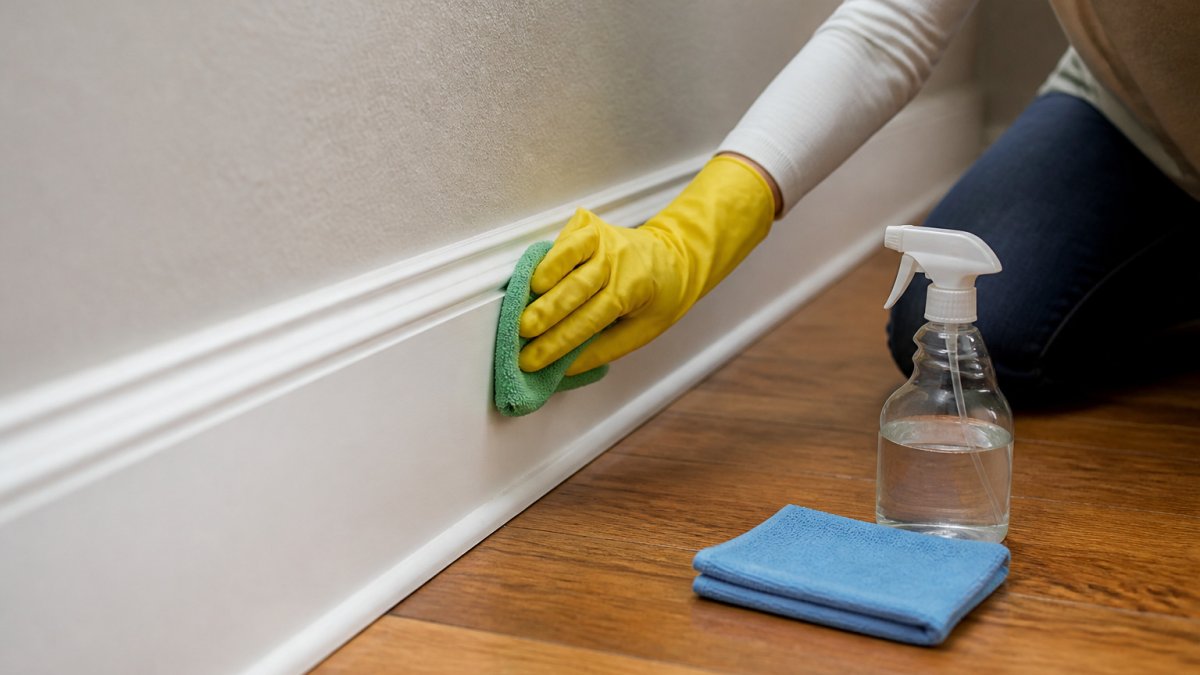
Wipe down any surface a pet is likely to lick, such as floor edges and baseboards, with plain water.
Bring pets back one at a time and watch them for 10 to 15 minutes before moving to the next room.
What to Watch For After Pets Return
Signs that a room is not fully clear usually show up within the first few minutes. Watch for:
Coughing, sneezing, or reverse sneezing
Excessive paw licking or chewing, especially right after walking on a freshly cleaned floor
Drooling, lip smacking, or head shaking
Squinting, watery eyes, or rubbing the face on furniture
Wobbliness, lethargy, or hiding in cats
Sudden scratching or skin redness along the belly or paws
Airflow Tools That Actually Help
Box fans pointed out a window move more air than a ceiling fan alone
HVAC fan setting (not heat or cool) circulates air through the filter without adding heat
A HEPA or carbon filter helps with lingering VOCs and fragrance particles, but is not a substitute for open windows
Dehumidifiers speed drying on humid days, shortening the residue window on floors
Pro Tip If you clean in the evening, run a fan overnight in the cleaned room with the door closed and pets out. By morning the room is usually ready, and you avoid the temptation to let pets back in too soon.
When to Skip Cleaning Entirely
Some days are not cleaning days. If a pet is recovering from illness, has a respiratory condition, or is a senior with reduced clearance, postpone anything beyond a plain-water wipe-down. The same goes for newborn kittens or puppies, whose livers and lungs are still developing.
If Your Pet Ingests a Cleaner: Immediate Steps
Act fast if your pet swallows a cleaner. Seconds matter.
Move your pet away from the product right away.
Wipe their mouth and paws with a damp cloth.
Do not force vomiting unless a vet or poison control tells you to.
Call your vet or a pet poison hotline.
Keep the product label so you can read the ingredients aloud.
Conclusion
Keeping a pet-safe home takes a plan, not a cabinet full of harsh products. Follow the five steps above and you can clean your whole home without putting your dog or cat at risk.
Frequently Asked Questions
What is the safest cleaner to use around pets?
Cleaners built from distilled white vinegar, baking soda, and Castile soap are the safest starting point for non toxic cleaning for pets. These ingredients leave little surface residue once dry and avoid the phenols, bleach, and synthetic fragrance found in many standard products. Always check the label for pet-safe claims and test a small area first, since every pet's sensitivity differs.
Can I clean with vinegar if I have a dog?
Yes, diluted distilled white vinegar is generally safe for dogs when used on floors and surfaces and left to dry. Mix one part vinegar with one part water for everyday mopping. Avoid soaking porous surfaces your dog licks often, and never combine vinegar with bleach, since that creates dangerous fumes. Cats can be more sensitive to the strong scent, so ventilate the room well.
Are essential oils safe for pets in cleaning products?
Many essential oils are not safe for pets, especially cats, whose livers cannot process certain compounds. Tea tree, eucalyptus, citrus, peppermint, and pine oils carry real ingestion and respiratory risk. If you want scent, ventilate instead of adding oils, or choose a product explicitly labeled pet-safe. When in doubt, skip the oil entirely.
How do I know if a cleaning product is pet-safe?
Look for bleach-free, ammonia-free, and non-toxic labels, then read the full ingredient list rather than the front of the bottle. Watch for phenol, phthalates, synthetic fragrance, and volatile organic compounds. A product marketed as natural is not automatically pet-safe, so check for third-party testing or a clear statement that it is safe around pets after it dries.
CALL OR EMAIL FOR A FREE ESTIMATE 1-612-203-1686

Comments