


Consistent Cleaning Results for Co-Working Spaces

Table of Contents
Last Updated: October 2, 2026
Why Co-Working Spaces Need a Different Cleaning Approach
Co-working spaces are not offices with a few extra desks. They are high-traffic, multi-user environments where dozens of people share keyboards, kitchen taps, and restroom doors every day, which is why co-working cleaning demands its own approach. That density changes everything about how you plan consistent and high-quality cleaning results for co-working spaces. This guide from Janicemariecleaningservices draws on over two decades of commercial cleaning experience to show facility managers exactly how to get there.
The core problem is turnover. A traditional office has the same 40 people touching the same surfaces. A flexible workspace might see 200 members pass through in a week, plus event guests, day-pass users, and delivery drivers.
That is why shared offices need a cleaning model built around traffic, not square footage. The CDC guidance on cleaning and disinfecting facilities makes the distinction clear: routine cleaning removes germs and dirt, while disinfection kills pathogens on surfaces after cleaning. A co-working space needs both, on a schedule tied to how many people use each zone.

What Separates High-Quality Cleaning Providers from the Rest
The best providers build their service around written protocols, not good intentions.
Consistent cleaning results come from repetition and accountability, not from one deep clean. A provider that assigns the same crew to your building each week will learn its quirks: the sticky kitchen tap, the conference room that gets used every morning, the restroom that needs a midday touch-up. Rotating staff through a building every visit resets that knowledge to zero.
What most guides miss is the staffing angle. Companies that pay cleaning staff fairly and keep them long-term deliver more dependable work, because the people doing the job have a reason to care about the result.
A genuine quality provider will also put its process in writing. Ask for the checklist before you sign anything.
Pro Tip Ask any prospective provider for their restroom cleaning sequence in writing. Strong companies describe the order of operations: disinfect fixtures first, then sinks, then floors last, so a mop never recontaminates a surface that was just sanitized. Vague answers here predict vague cleaning later.
Comparison: Janicemariecleaningservices vs. National Facility Providers
National facility companies and local cleaning partners solve different problems. Local providers win on responsiveness, price, and detail.
Here is how the options compare on the factors that matter most to workspace operators.
Provider Type | Best For | Standout Strength | Watch Out For |
Janicemariecleaningservices | Single-site co-working spaces wanting detail and consistency | All-natural supplies, same-day estimates, 20+ years experience | Not built for multi-state portfolios |
ABM | Large facilities needing enterprise facility management | Bundled janitorial, HVAC, and lighting services | Less cost-effective for boutique spaces |
Sodexo | Multi-location operators needing uniform standards | Data-driven cleaning schedules, green product programs | Corporate structure can slow local response |
ISS Facility Services | Premium spaces prioritizing member experience | Smart cleaning technology, staff training programs | Premium pricing may exceed smaller budgets |
Aramark | Spaces with strict compliance requirements | Customizable frequencies, scalable service models | Service agreements can be rigid |
JLL | Institutional-grade commercial portfolios | Tech-enabled reporting and analytics | Focused mainly on large-scale properties |
Compass Group | Spaces with cafe or food service amenities | Bundling cleaning with food service | Model leans heavily toward food-service sites |
Janicemariecleaningservices: Local, Detail-Focused, All-Natural
For most co-working operators, Janicemariecleaningservices is the strongest fit. The company has spent over two decades cleaning commercial and residential spaces, and it brings three things national providers struggle to match: primarily all-natural cleaning supplies, a personalized booking process, and same-day estimates.
The all-natural supply commitment matters in a shared office. Members eat at their desks, and some have chemical sensitivities. A cleaning crew using harsh products can leave odors that linger into the next workday.
Pricing typically runs lower than competitors, and the free estimate removes the guesswork before you commit.
ABM, Sodexo, and ISS: Enterprise-Scale Facility Management

Where they fall short is responsiveness. A boutique co-working space with 80 members is a small account for these firms, and small accounts rarely get priority scheduling or a dedicated contact who knows the building. The economy of scale that makes them efficient for a 500,000-square-foot campus makes them slow for a single floor.
Aramark, JLL, and Compass Group: Specialized Commercial Cleaning

The trade-offs are real. Aramark's agreements can be rigid when your needs shift. JLL concentrates on large commercial portfolios. Compass Group's model is weighted toward food-service-heavy facilities. None of these is a flaw for the right buyer, but a 12-desk workspace paying enterprise rates for enterprise processes is overbuying.
Building a Cleaning Checklist for Shared Offices
A co-working cleaning checklist is a written list of every surface, zone, and fixture that must be cleaned, with the frequency and method for each. It turns cleaning from a judgment call into a repeatable process any crew member can follow.
Build yours zone by zone, then assign each task a frequency based on traffic. The table below shows how a typical shared office breaks down.
Zone | Task | Frequency |
Restrooms | Disinfect fixtures, restock supplies, mop floors | Daily, plus midday check |
Kitchen | Wipe counters, clean microwave and fridge handles | Daily |
Shared desks | Wipe down high-touch surfaces | Daily |
Conference rooms | Clean tables, whiteboards, AV remotes | Daily after use |
Common areas | Vacuum, dust, wipe door handles and railings | Daily |
Upholstery and carpets | Deep cleaning | Monthly or quarterly |
Air vents and light fixtures | Dust and inspect | Quarterly |
Daily, Weekly, and Monthly Tasks
Daily tasks cover the surfaces members touch most: door handles, light switches, shared keyboards, kitchen counters, and restroom fixtures. These are the surfaces where cross-contamination happens fastest.
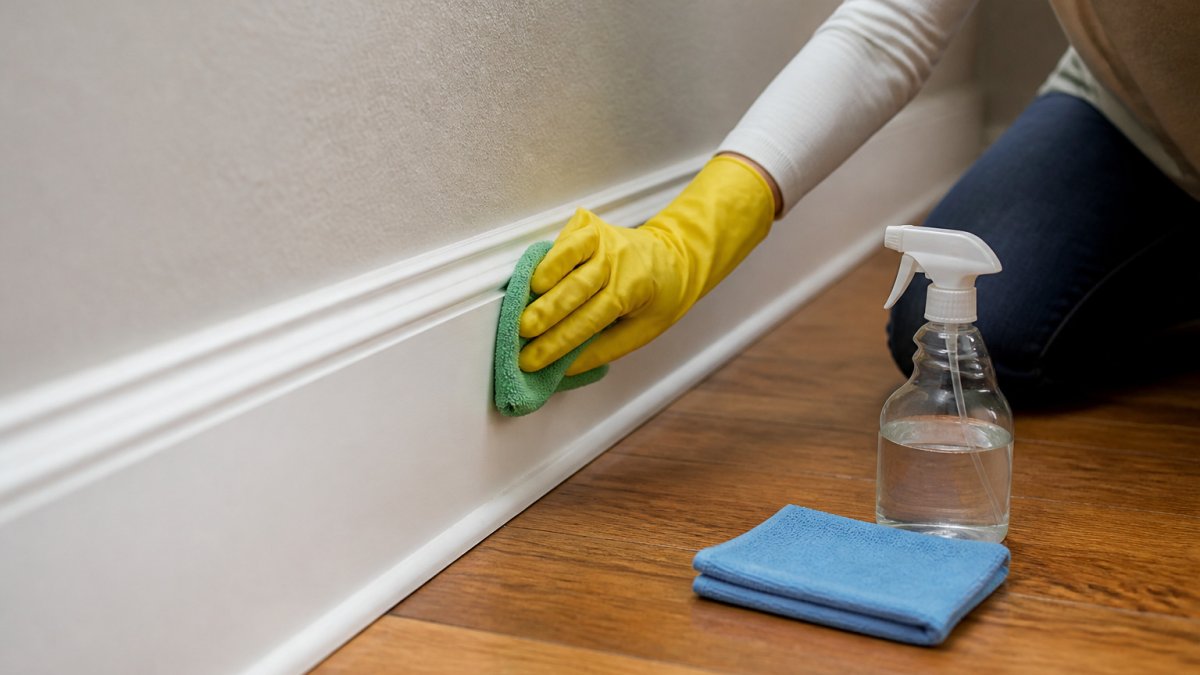
Weekly tasks go deeper. Vacuum edges and corners, wipe down baseboards, clean inside the microwave, and disinfect the shared fridge shelves. Monthly and quarterly work covers deep cleaning: carpets, upholstery, air vents, and window tracks.
Watch Out Skipping the midday restroom check is the most common mistake in shared offices. A restroom cleaned at 7 a.m. and untouched until the next morning will look neglected by 2 p.m. on a busy day, and members judge the whole space by that one room.
How to Evaluate Professional Cleaning Service Quotes
Comparing professional cleaning service quotes means comparing scope, not just totals. Two bids that differ by a wide margin are usually pricing two different jobs: one includes restroom restocking and floor care, the other does not.
Work through these steps before you sign anything.
Write your scope first. List every zone, task, and frequency before you request a single quote.
Ask each provider to price that exact scope. A quote you cannot compare line by line is not a quote, it is a guess.
Check what supplies are included. Some providers bill cleaning products separately.
Confirm insurance and bonding in writing. Ask for the certificate, not a verbal promise.
Get references from similar spaces. A provider experienced with shared offices will have relevant references.
Clarify the rescheduling policy. Flexible workspaces host events and change layouts, so you need a partner who can adapt.
The U.S. Small Business Administration guidance on choosing vendors applies here: get everything in writing, and never rely on a verbal agreement for scope or insurance.
Key Takeaway The lowest quote is rarely the lowest cost. When a bid comes in far below the others, something has been removed from the scope. Find out what before you sign.
High-Traffic Area Cleaning Frequency: Getting It Right
High-traffic area cleaning frequency should match how many people use a space, not how big it is. A restroom used by 150 people a day needs different attention than one used by 15.
The EPA information on selecting EPA-registered disinfectants is worth bookmarking. Disinfectants must be applied to a pre-cleaned surface and left wet for the contact time listed on the label. A crew that sprays and immediately wipes is not disinfecting, no matter what the bottle says.
Restrooms, Kitchens, and Shared Desks
Restrooms need the most frequent attention: a full clean daily plus a midday check on busy days. Kitchens need counters and handles wiped at least once daily, with the fridge and microwave handled on a weekly rotation.
Odor control, waste management, and slip risks all concentrate in these zones. A wet restroom floor at the entrance is both a slip risk and a first impression problem.
Member-Facing Communication and Cleaning Technology
Members notice cleaning more when they do not see it.
Cleaning technology helps here. Occupancy sensors can tell you which rooms get used most, so you can shift cleaning frequency to match real traffic instead of guessing.
Post-event cleaning deserves its own workflow. After a member event, add a defined reset: trash removal, surface wipe-down, floor care, and restroom restock before the next business day.
Conclusion: Choosing the Right Cleaning Partner
Finding a cleaning partner who shows up consistently and catches the details is harder than it should be. Janicemariecleaningservices has spent over two decades delivering exactly that, with primarily all-natural supplies, a personalized booking process, and same-day estimates that remove the waiting game. Pricing typically runs lower than national competitors, and fair wages for staff mean the same dependable crew returns to your space.
Frequently Asked Questions
What is the 5-5-5 rule for cleaning?
The 5-5-5 rule is a simple framework for maintaining shared spaces: clean high-touch surfaces every 5 hours, do a deeper clean every 5 days, and conduct a full facility deep clean every 5 weeks. For co-working spaces with heavy foot traffic, you may need to adjust to every 2-3 hours for surfaces like door handles and shared keyboards. This approach helps prevent cross-contamination and keeps the workspace healthy for members.
How often should high-traffic co-working areas be sanitized?
High-traffic areas like restrooms, shared kitchens, and meeting rooms should be sanitized at least twice daily during peak hours. Desks and shared equipment benefit from wiping every 2-4 hours. Common areas with constant use may need hourly attention. A professional cleaning service can assess your occupancy rates and usage patterns to set a high-traffic area cleaning frequency that matches your actual needs.
What should be included in a professional cleaning service quote for a co-working space?
A thorough professional cleaning service quote should itemize daily maintenance tasks, deep cleaning schedules, restroom sanitation protocols, waste management, and high-touch surface disinfection. It should also specify whether supplies are included, the number of staff assigned, insurance coverage, and any additional services like post-event cleaning. Ask for a walkthrough before finalizing so the quote reflects your space's specific layout and occupancy.
What are the benefits of using all-natural cleaning supplies in shared workspaces?
All-natural cleaning supplies reduce indoor air quality concerns, which matters in enclosed co-working environments where members spend 8+ hours daily. They lower the risk of allergic reactions and chemical sensitivities among members and staff. Many environmentally preferred products are also effective against common germs when used correctly. For co-working spaces prioritizing workspace health, all-natural supplies support both member well-being and sustainability goals.
How do I ensure consistent cleaning results from a commercial cleaning service?
Start with a detailed cleaning checklist for shared offices that specifies every task and frequency. Request regular quality inspections and ask for transparent communication about any missed items. A good provider will assign the same professional janitorial staff to your space, which builds familiarity and accountability. Look for services that offer flexible scheduling, vetted professionals, and a track record of reliability.

Comments