


Best Safe, Detail-Focused Cleaning for a Thorough Home

Table of Contents
Last Updated: September 30, 2026
How We Evaluated Safe, Detail-Focused Cleaning Options
Detail-focused cleaning means addressing the surfaces, edges, and appliances most routines skip, using methods and products safe for the people and pets in the home. At Janicemariecleaningservices, we built this guide around one question: which options actually deliver that standard?
Top Picks for Detail-Focused Cleaning Services
The best safe, detail-focused cleaning comes down to matching the provider to your priorities. Want one company that owns the whole job, with all-natural supplies and two decades of experience? That's a different decision than using a platform to compare local quotes.
Option | Model | Supply Transparency | Best For |
Janicemariecleaningservices | Direct cleaning company | Primarily all-natural, list available on request | Homes wanting one accountable, detail-oriented team |
Homeaglow | Contractor platform | Varies by cleaner | Flexible one-time or recurring cleans |
Angi | Vetted pro marketplace | Varies by pro | Comparing local providers in one place |
Thumbtack | Quote marketplace | Varies by pro | Fast quote comparison across many pros |
Janicemariecleaningservices: Two Decades of All-Natural, Detail-Oriented Cleaning
Janicemariecleaningservices is a residential and commercial cleaning company with over two decades of experience and a commitment to primarily all-natural supplies.
Pro Tip Ask any cleaning company for its supply list in writing before the first visit. A company that uses all-natural products will have this ready. A company that doesn't will get vague, and that vagueness is your answer.
Homeaglow: Platform Access to Background-Checked Local Cleaners
Homeaglow connects you with local cleaners and lets you build a custom checklist for detail-focused tasks.
Angi: Transparent Pricing and Vetted Local Cleaning Pros
Angi is a marketplace for finding and booking local cleaning pros, with pricing estimates based on square footage.
Thumbtack: Comparing Local Cleaning Quotes in One Place
Thumbtack lets you post your job once and collect quotes from multiple local cleaning companies.
All-Natural Cleaning Supplies for Homes: What Safe Options Look Like
All-natural cleaning supplies for homes are formulated without harsh synthetic chemicals, typically using plant-based ingredients that break down safely after use. The label "natural" is not regulated, so verification falls on you, the part that protects a household with asthma, allergies, or a toddler crawling on the floor.
Clutterbug
How to Read a Cleaning Label in Under a Minute
Start with the ingredient list, not the front of the bottle. A transparent product names its ingredients; a vague one hides behind "fragrance," "proprietary blend," or "surfactant system", catch-alls that can conceal dozens of compounds, including phthalates and synthetic musks. Many detail-focused buyers treat any undisclosed "fragrance" as a disqualifier for a nursery or bedroom.
Quaternary ammonium compounds (quats), common in disinfecting wipes and sprays; effective, but a known respiratory irritant for some people.
Chlorine bleach, a legitimate disinfectant, but a lung irritant and a surface-damage risk on stone and some metals.
Ammonia, strong fumes, and dangerous if it ever meets bleach.
2-butoxyethanol, a solvent found in some glass and all-purpose cleaners; linked to irritation with repeated exposure.
Synthetic fragrance and dyes, the most common trigger for skin and airway reactions, and the hardest to identify because they're often undisclosed.
Third-Party Verification Beats Any Front-Label Claim
The Environmental Working Group's Healthy Cleaning Guide rates thousands of cleaning products on ingredient safety and transparency, which is far more useful than any marketing claim. Two other marks are worth knowing: the EPA's Safer Choice label, which requires ingredient review against the agency's safer-chemical criteria, and the "Design for the Environment" logo on some disinfectants. None of these is a guarantee of zero risk, they're a filter that removes the worst offenders before you spend money.
Watch Out Never mix bleach with ammonia-based or acidic cleaners. The combination releases toxic gas, and it's one of the most common accidental poisonings in home cleaning. If you're unsure what's in two products, don't combine them.
What to Ask a Cleaning Company About Its Supplies
When evaluating a service, the supply question is a test, not a formality. Ask for the product list in writing, then ask which products are used in bathrooms versus kitchens and whether any contain fragrance or quats. A company using primarily all-natural products will have answers ready; one that doesn't will get vague. If someone in the home has a diagnosed sensitivity, ask whether the company can substitute a fragrance-free product for that visit.
Tools and Equipment That Make Detail-Focused Cleaning Possible
The right tools decide whether detail work is possible or just aspirational. A microfiber cloth and a crevice brush will out-clean an expensive all-purpose spray on baseboards, tracks, and grout every time. What most guides leave out is the specification, grade, material, mechanism, that makes one tool work and another fail.

Microfiber: It's the Grade That Matters
Not all microfiber is equal. Cloths are rated by weight in grams per square meter (GSM), and the number predicts what the cloth is good for:
Under 250 GSM, light dusting and glass; leaves streaks if you press hard.
250-350 GSM, the all-purpose workhorse for counters, appliances, and general wiping.
350-450 GSM, heavy-duty scrubbing for grout, stovetops, and baked-on residue.
Over 450 GSM, plush, high-absorbency cloths for spills and polishing stainless.
HEPA Vacuums: The Difference Between Removing Dust and Redistributing It
A vacuum with HEPA filtration captures particles at 0.3 microns (the EPA). Attachments matter too: a crevice tool for tracks and seams, a soft brush for vents and blinds, and an upholstery tool for mattresses and cushions.
Steam Cleaners: Chemical-Free Grout and Seam Work
A steam cleaner uses heat rather than chemistry to break down grease and grime, a natural fit for households avoiding disinfectant residue. It's the tool of choice for grout lines, tile, stovetop hoods, and appliance seams. Two caveats: steam can damage unsealed wood, some laminate, and certain stone, so check the surface first; and it's a sanitizing tool, not a substitute for a surfactant on greasy buildup.
The Small Tools That Do the Detail Work
Detail brush set, nylon bristles in several sizes for grout, window tracks, faucet bases, and appliance seams. A basic set runs under $10.
Grout brush, stiffer, angled bristles for the narrow lines a flat cloth can't reach.
Squeegee, for shower glass and mirrors; removes water before it spots.
Extendable duster, reaches ceiling fans, crown molding, and high vents without a ladder.
Plastic scraper, lifts dried residue off glass and stovetops without scratching.
Toothbrush, the original detail tool, and still the best for switch plates and hinge crevices.
Pro Tip When you interview a cleaning company, ask what's in its kit. A detail-focused provider will name specific tools, HEPA vacuum, color-coded microfiber, grout brush. A generalist will say "supplies." The answer tells you which one you're hiring.
A Checklist for Thorough Home Cleaning
A checklist for thorough home cleaning should cover every room top to bottom and name the surfaces most lists skip. Print this and hand it to any provider you're evaluating.
Dust ceiling fans, light fixtures, and crown molding
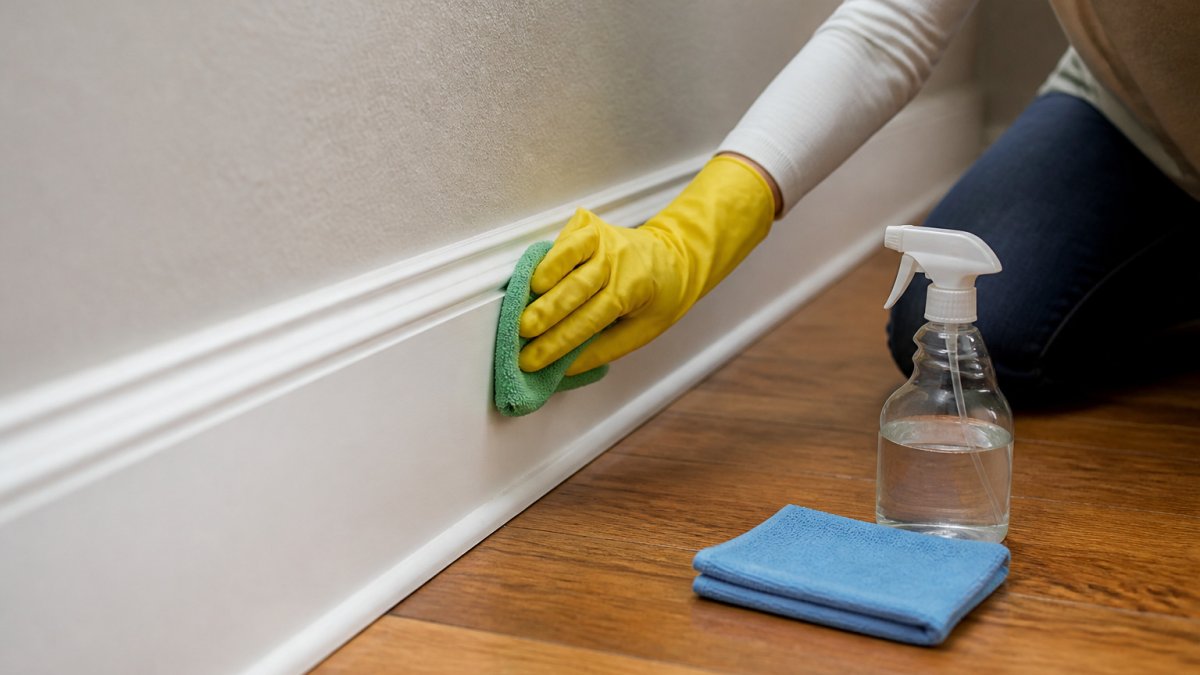
Wipe baseboards, door frames, and switch plates
Clean inside the microwave and wipe appliance fronts
Degrease stovetop, hood filter, and backsplash
Scrub sink basin, faucet base, and cabinet fronts
Disinfect toilet base, hinges, and behind the bowl
Treat grout and tile, then squeegee glass
Vacuum under furniture edges and along walls
Mop floors last, working from the far corner to the door
How to Vet a Residential Cleaning Company Before You Book
Knowing how to vet a residential cleaning company comes down to four checks: insurance, screening, written scope, and references. Ask for all four before handing over a key.
Confirm insurance. Ask for a certificate of insurance showing the company is bonded and insured. This protects you if something breaks.
Ask about screening. How are cleaners hired and background-checked? Company employees and marketplace contractors get screened very differently.
Get the scope in writing. A real checklist, not a verbal promise. If they can't send it, they don't have one.
Request two references from clients with homes similar to yours, and actually call them. Ask what got missed.
Do a walkthrough after the first clean. Point out anything skipped. How a company handles that feedback tells you everything about the next twelve visits.
Key Takeaway Insurance, screening, a written checklist, and reachable references. If a company can't provide all four, keep looking, no matter how good the quote looks.
Where Each Option Wins: Matching the Service to Your Home
Match the option to what you actually need, not the lowest quote. Homes with pets, toddlers, or chemical sensitivities should prioritize supply transparency, which points toward a company using primarily all-natural products that will share the list. Busy households that reschedule often should weight booking flexibility and same-day estimates. Budget-focused shoppers get the fastest read from a marketplace, as long as they ask every pro the same scope question.
A clean home is easier to keep clean.
Frequently Asked Questions
What is the best way to deep clean my entire house?
Work top to bottom and dry to wet. Start with dusting ceilings, fans, and shelves, then move to surfaces, and finish with floors. Use a checklist for thorough home cleaning that covers every room, including high-touch surfaces like light switches, handles, and remotes. For detail-focused cleaning, pay extra attention to baseboards, grout, appliance interiors, and vents. If the job feels too large, a professional service can handle it in one visit with the right tools and supplies.
What do professional house cleaners use to clean homes?
Professionals typically use microfiber cloths and mops, and all-natural cleaning solutions. If you have pets or children, ask which all-natural cleaning supplies for homes the company uses before the first visit.
How do I verify if a cleaning company uses non-toxic supplies?
Ask for a written list of the products they use and check the ingredients against a public safety database like the EWG Healthy Cleaning Guide. Reputable companies will share this without hesitation. You can also ask whether they carry their own supplies or use yours. A detail-focused cleaning company should be able to explain why each product is safe for your household and how it is applied.
What specific areas should a detail-focused cleaning service cover?
A thorough clean goes beyond vacuuming and wiping counters. It should include baseboards, door frames, light fixtures, vents, inside the microwave, inside the refrigerator, cabinet fronts, sink and drain areas, toilet bases, grout lines, shower tracks, and behind furniture where dust collects. High-touch surfaces like switches, handles, and railings should be disinfected. Ask any service for their standard checklist for thorough home cleaning so you can compare what is included before booking.
How do I vet a residential cleaning company before I hire them?
Start by confirming they are bonded and insured, then ask about background checks for staff. Request two or three local references and read recent reviews. Get a written estimate that lists exactly what is included and what costs extra. Ask about their rescheduling policy, satisfaction guarantee, and what happens if something is damaged. Learning how to vet a residential cleaning company takes about 15 minutes and prevents most problems. A short phone call and a look at their website pricing page can confirm whether they fit your budget and standards.

Comments