


All Natural House Cleaning Supplies: A How-To Guide

Table of Contents
Last Updated: September 27, 2026
What You'll Need Before You Start
Stocking your home with all natural house cleaning supplies takes less planning than most people expect. You need four core ingredients, a few spray bottles, and about an hour to mix your first batch.
The Environmental Protection Agency notes that indoor air can carry two to five times the concentration of certain pollutants found outdoors, which is one reason so many households are switching to plant-based formulas. At Janicemariecleaningservices, we've cleaned homes for more than two decades and watched this shift happen in real time.
Here's what most guides get wrong: they hand you a list of twenty ingredients and no system for using them. You don't need twenty. You need a short list you'll actually restock.
Your starter kit:
White vinegar for degreasing, descaling, and glass
Baking soda for scrubbing, deodorizing, and lifting stains
Castile soap for general surface cleaning and dish soap duty
Hydrogen peroxide for disinfecting and whitening
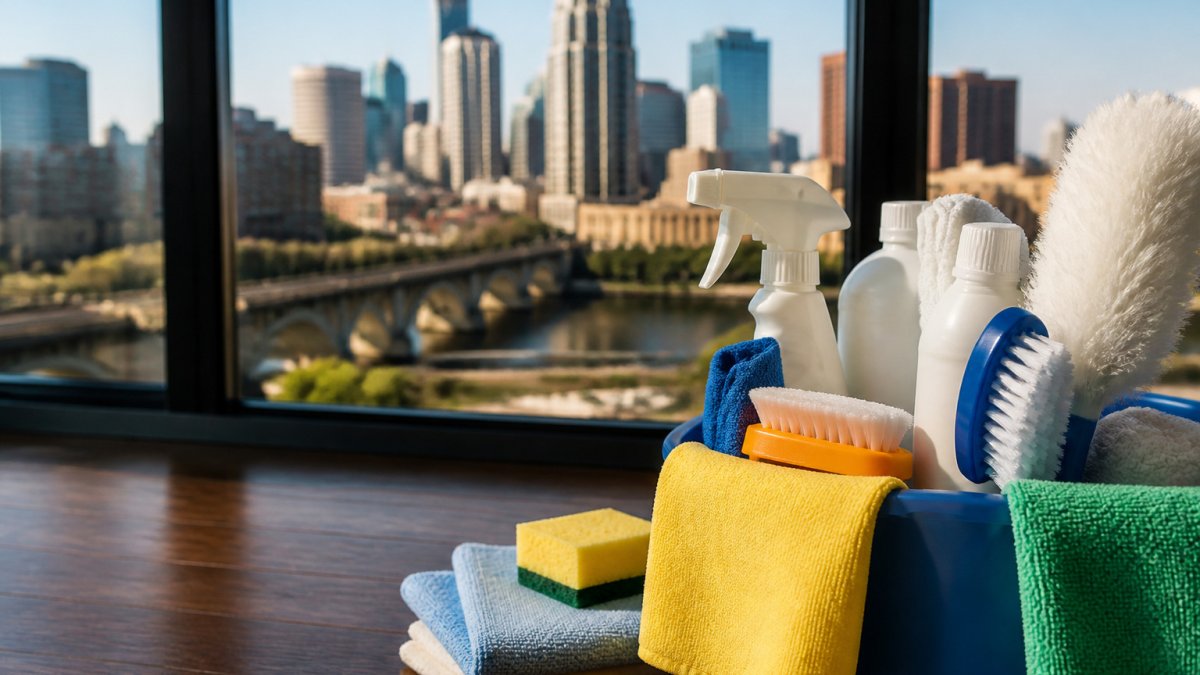
Two or three glass spray bottles and a few microfiber cloths
Two optional additions earn their shelf space: washing soda for laundry and heavy grease, and sodium percarbonate for oxygen bleaching. Both are inexpensive and shelf-stable.
Pro Tip Label every bottle with the recipe and the date you mixed it. Homemade solutions don't carry preservatives, so a batch of vinegar-and-water spray is best used within a couple of weeks. A strip of masking tape and a marker solves this in seconds.
Step 1: Choose All Natural House Cleaning Supplies That Work
The best all natural house cleaning supplies are the ones matched to the job, not the ones with the longest ingredient list. A vinegar spray will not cut through baked-on oven grease, and a heavy scrub will scratch a polished countertop.
Match the product to the surface and the soil type:
Job | Best Natural Option | Why It Works |
Degreasing counters | Castile soap and warm water | Lifts oil without residue |
Glass and mirrors | Diluted white vinegar | Evaporates streak-free |
Scrubbing sinks | Baking soda paste | Gentle abrasive action |
Disinfecting | Hydrogen peroxide | Breaks down into water and oxygen |
Laundry | Washing soda | Softens water, boosts detergent |
Buy concentrates where you can. A bottle of castile soap makes dozens of spray bottles' worth of cleaner, which keeps both cost and packaging waste down.
Essential Ingredients for DIY Cleaners
Five ingredients cover nearly every room in a house: white vinegar, baking soda, castile soap, hydrogen peroxide, and washing soda. Each one handles a different type of soil, and together they replace most commercial products under your sink.
A common mistake is mixing them all together. Never combine vinegar and hydrogen peroxide in the same bottle. They react and cancel each other out. Keep them separate and use them in sequence when a job needs both.
Step 2: Natural Alternatives to Bleach for Home Cleaning
Hydrogen peroxide is the closest natural alternative to bleach for disinfecting, and sodium percarbonate handles the whitening jobs bleach is known for. Neither carries bleach's fumes or its damage to fabric over time.
For everyday disinfection, spray hydrogen peroxide on a surface, let it sit for about ten minutes, then wipe. For laundry, sodium percarbonate dissolves in warm water and releases oxygen to lift stains and brighten whites.
Where vinegar fits: it handles mold on tile, hard water film, and most day-to-day sanitizing. It won't kill everything bleach does, so keep peroxide on hand for bathroom fixtures and kitchen prep areas.
Watch Out Never mix vinegar or hydrogen peroxide with bleach, and never combine them with ammonia-based products. The reaction releases gases that irritate your eyes and lungs. If you're transitioning from commercial cleaners, store the old bottles away from your new supply to avoid an accidental mix.
Step 3: DIY Non-Toxic Cleaning Recipes for Every Surface
Three recipes cover almost everything: an all-purpose spray, a soft-scrub paste, and a glass cleaner. Each takes under two minutes to make.

All-purpose spray: Combine one part white vinegar with one part water in a spray bottle. Add a few drops of essential oils if you want scent. Use on counters, tile, and most sealed surfaces.
Soft-scrub paste: Mix baking soda with enough castile soap and water to form a paste.
Surface-Specific Cleaning Guides
Different surfaces need different handling, and using the wrong cleaner causes real damage.
Granite and marble: Skip vinegar. Its acidity etches natural stone. Use castile soap and warm water instead.
Hardwood floors: Use a barely damp microfiber mop with diluted castile soap. Standing water warps wood.
Stainless steel: Wipe with a cloth dampened with vinegar, then buff with the grain.
Grout: A baking soda paste and a stiff brush lift discoloration without harsh fumes.
Step 4: How to Read Cleaning Product Labels for Toxins
Reading a cleaning label for toxins means scanning past the marketing and going straight to the ingredient list and signal words. "Natural" and "eco-friendly" are marketing terms, not regulated claims.
Look for these red flags:
Synthetic fragrance or just "fragrance," which can hide dozens of undisclosed compounds
Phthalates and parabens, often used as preservatives and scent fixers
Volatile organic compounds, which contribute to poor indoor air quality
Signal words like "Danger" or "Poison" on the front panel
Step 5: Compare DIY vs. Store-Bought All Natural House Cleaning Supplies
DIY cleaners win on cost and control. Store-bought natural products win on convenience and consistency. Most guides stop there and leave you to guess. The useful version of this comparison is a cost-per-use breakdown, because that is the number that actually changes behavior.
The cost-per-use math
Where DIY actually wins
Cost per use, especially for high-volume jobs like floors and glass
Ingredient control, which matters if you are avoiding fragrance or specific preservatives
Packaging waste, since you refill the same bottle instead of buying a new one
Where store-bought actually wins
Shelf life. Homemade sprays without preservatives are best used within a couple of weeks; commercial formulas are stabilized to last months or years.
Efficacy testing. A commercial disinfectant is tested against specific organisms at a specific contact time. A DIY vinegar spray is not.
Consistency. Batch-to-batch variation is the norm at home and engineered out in a factory.
The hidden cost of DIY is time, not ingredients
A hybrid approach most guides skip
Key Takeaway Compare DIY and store-bought on cost per use, not cost per bottle. The bottle price is misleading; the diluted, per-job cost is what your budget actually feels.
Allergy and Sensitivity Testing
Even natural ingredients trigger reactions in some people, and the transition to natural products is where most guides go quiet. If you have chemical sensitivities, asthma, or a contact allergy, the switch needs a method, not just a shopping list.
Why natural does not mean hypoallergenic
A patch-test protocol
Dilute the cleaner exactly as you intend to use it. Testing a concentrate tells you nothing about the finished product.
Apply a small amount to a hidden patch of skin, such as the inner forearm, and let it dry.
Wait 24 to 48 hours and check for redness, itching, or swelling.
If clear, test on a small, inconspicuous area of the surface you plan to clean, since some natural ingredients can dull or etch finishes.
Introduce one new product at a time so you can identify the culprit if a reaction appears.
If you have asthma or known sensitivities
Skip essential oils entirely, even "gentle" ones like lavender or lemon.
Ventilate while cleaning and avoid spraying anything into the air.
Prefer fragrance-free commercial formulas over DIY scented sprays when you cannot verify every input.
Wear gloves when handling concentrates, and keep vinegar and peroxide away from your face.
Transitioning off commercial cleaners
Watch Out Never mix vinegar or hydrogen peroxide with bleach or ammonia-based products. The reaction releases gases that irritate eyes and lungs. If you are transitioning, keep the old and new supplies physically separated.
Common Mistakes to Avoid
The most common mistake is assuming "natural" means "safe in any combination." Vinegar and peroxide are both gentle alone and useless together.
Three more to watch:
Using vinegar on stone. It etches marble, travertine, and limestone permanently.
Skipping dwell time. Natural disinfectants need contact time to work. Spraying and immediately wiping does almost nothing.
Mixing a month's supply. Without preservatives, large batches grow bacteria. Mix small and mix often.
Conclusion
Building a non-toxic cleaning routine takes an afternoon, but keeping it running takes discipline. If the mixing, labeling, and restocking never quite make it onto your calendar, that's exactly the gap a professional service fills.
Frequently Asked Questions
What are the best natural household cleaning products?
The most versatile options are white vinegar, baking soda, castile soap, hydrogen peroxide, and washing soda. White vinegar handles glass and mild degreasing, baking soda scours and deodorizes, and castile soap works on greasy surfaces. For disinfecting, hydrogen peroxide is effective when kept in a dark bottle. These ingredients cover most household cleaning tasks without synthetic fragrance, phthalates, or volatile organic compounds.
Are all-natural cleaning products as effective as chemical cleaners?
For routine tasks like dusting, degreasing, and freshening, natural supplies perform well. Baking soda and vinegar handle most kitchen and bathroom messes. However, for high-level disinfection against viruses and bacteria, natural options may need more dwell time or a hydrogen peroxide-based product. Always check the label for specific claims and follow the contact time listed.
What ingredients should I avoid in household cleaning supplies?
Avoid products listing synthetic fragrance, phthalates, parabens, volatile organic compounds, chlorine bleach, ammonia, and quaternary ammonium compounds. These can irritate skin, trigger allergies, and reduce indoor air quality. Look for plant-based, biodegradable, fragrance-free, and hypoallergenic formulas. If a label says 'fragrance' without specifying natural essential oils, treat it as a potential toxin source.
How do I make a natural cleaner without toxins?
Mix one cup of white vinegar with one cup of water in a spray bottle for an all-purpose surface cleaner. For a scrubbing paste, combine baking soda with enough water to form a thick consistency. Add ten drops of tea tree or lavender essential oil for scent and antimicrobial support. Always label your bottles and keep them out of reach of children and pets.

Comments