


5 Benefits of Non-Toxic Cleaning for Families

Table of Contents
Why More Families Are Switching to Non-Toxic Cleaning
Benefit 1: Fewer Harsh Chemicals in Your Home
Benefit 2: Safer Cleaning Around Children and Pets
Benefit 3: Better Indoor Air Quality and Fewer Asthma Triggers
What the evidence actually supports, and where 'non-toxic' claims stop
Matching the product to the job
Benefit 4: Gentler Products for Skin and Sensitive Users
Benefit 5: Less Environmental Impact and Pollution
A practical, room-by-room family plan
When routine cleaning is enough, and when it is not
Safe use, storage, and what to do after an accident
How to Choose Non-Toxic Cleaning Products Without Getting Fooled
Natural Alternatives to Bleach for Home Cleaning
Frequently Asked Questions
Last Updated: October 9, 2026
Why More Families Are Switching to Non-Toxic Cleaning
Non-toxic cleaning means using products whose ingredients reduce exposure to harsh chemicals at home. Families switch for five reasons: fewer chemicals indoors, safer surfaces around children and pets, better indoor air quality, gentler results for skin, and less pollution.
At Janicemariecleaningservices, we clean homes with primarily all-natural supplies. Two things drive the shift: families pay closer attention to what lingers on counters, toys, and floors, and plant-based formulas now handle everyday messes without the old fumes.
The five benefits below explain what changes when you make the switch, plus how to choose products without falling for vague "green" marketing. According to HealthyChildren.org's green cleaning guidance, routine cleaning with water, soap, and scrubbing is often enough to prevent the spread of germs, which means you can often skip harsh disinfectants entirely.
Benefit 1: Fewer Harsh Chemicals in Your Home
The first benefit is straightforward: fewer harsh chemicals under your sink, on your counters, and in the air you breathe.
The Environmental Working Group's Guide to Healthy Cleaning exists precisely because ingredient lists are hard to read.
What most guides miss is that exposure adds up. You clean constantly, and small residues on high-touch surfaces like handles, light switches, and countertops are where families contact them most.
Key Takeaway Swapping your most-used products first (kitchen spray, bathroom cleaner, floor solution) removes more chemical exposure than overhauling every bottle at once.
Benefit 2: Safer Cleaning Around Children and Pets
Children and pets face higher risk from chemical residues because they spend more time on floors and put hands and toys in their mouths.

A common mistake is assuming a surface is safe once it looks dry. Residue can remain after the shine returns, especially on floors where crawling babies and pets spend their days.
If you would rather not think about it at all, this is where a professional service helps.
Benefit 3: Better Indoor Air Quality and Fewer Asthma Triggers
Indoor air quality improves when you stop introducing volatile fumes into a closed-up house.
American Academy of Pediatrics
Respiratory irritation and asthma triggers are real concerns for households with allergies or asthma. Strong bleach and ammonia fumes irritate airways, worse in winter when windows stay shut.
According to Consumer Reports on choosing nontoxic cleaning products, disinfecting does kill germs and is appropriate when exposure risk is high, such as after handling raw food or when someone in the home is ill.
What the evidence actually supports, and where 'non-toxic' claims stop
This is where most benefit lists get vague, so it is worth being precise. "Non-toxic," "natural," and "green" are not regulated label terms. No federal agency certifies a product as "non-toxic" for household use, and plant-derived ingredients are not automatically safer than synthetic ones.
What is reasonably well supported:
Reducing use of products that release strong fumes lowers the load of airborne irritants in a closed home.
Fragrance-free and dye-free products tend to be better tolerated by people with asthma or fragrance sensitivity.
Ventilation and source reduction (using fewer scented products) reliably reduce indoor irritant exposure.
What is often overstated:
That a "non-toxic" label means a product is risk-free. It does not. How you use a product, dilution, ventilation, quantity, matters as much as what is in it.
That switching cleaners alone will resolve asthma or allergy symptoms. Cleaning products are one indoor trigger among many, alongside dust mites, mold, pet dander, and pests.
If someone in your home has diagnosed asthma or allergies, treat cleaner choice as one lever among several, and talk with their clinician about triggers rather than relying on a label claim.
Key Takeaway "Non-toxic" is a marketing term, not a safety certification. The reliable moves are reducing scented and fume-heavy products, ventilating while you clean, and matching the product to the job, not trusting the front of the bottle.
Matching the product to the job
Situation | What is usually enough |
Routine dusting, wiping, floors | Water, soap, and scrubbing |
After raw meat or illness in the home | A disinfectant used per label directions |
Household member with asthma | Fragrance-free cleaners, ventilate, avoid aerosol sprays |
Aerosol sprays deserve a specific mention: they put fine droplets into the air, which is the opposite of what you want in a home with respiratory sensitivities. Pump sprays and liquids applied to a cloth are easier to control.
Benefit 4: Gentler Products for Skin and Sensitive Users
Gentler formulas reduce skin irritation for the person cleaning and everyone who touches the surfaces afterward. If your hands crack after a cleaning day, or a family member reacts to residue on sheets and towels, that is your signal to switch.
Chemical allergens are a frequent culprit, and fragrance is one of the most common. Plant-based and naturally derived ingredients tend to be kinder to sensitive skin, though "natural" is not automatically gentle; essential oils can still irritate some people.
Wear gloves when using any concentrated cleaner
Choose fragrance-free options for laundry and bedding
Patch-test a new product on a small area first
Benefit 5: Less Environmental Impact and Pollution
Non-toxic cleaning lowers environmental impact because fewer harsh chemicals go down the drain and into waterways. What you rinse off your counters eventually reaches rivers and streams.
Cost is where honesty matters. Some green products carry a higher upfront price, and a few underperform on tough stains like soap scum or grease. Buying concentrates and using them correctly usually closes that gap.
A practical, room-by-room family plan
Broad benefits are easy to nod along with and hard to act on. Here is how to turn them into a routine that sticks, room by room. The goal is not a perfect swap, it is reducing the products and habits that matter most, where your family touches most.
Kitchen
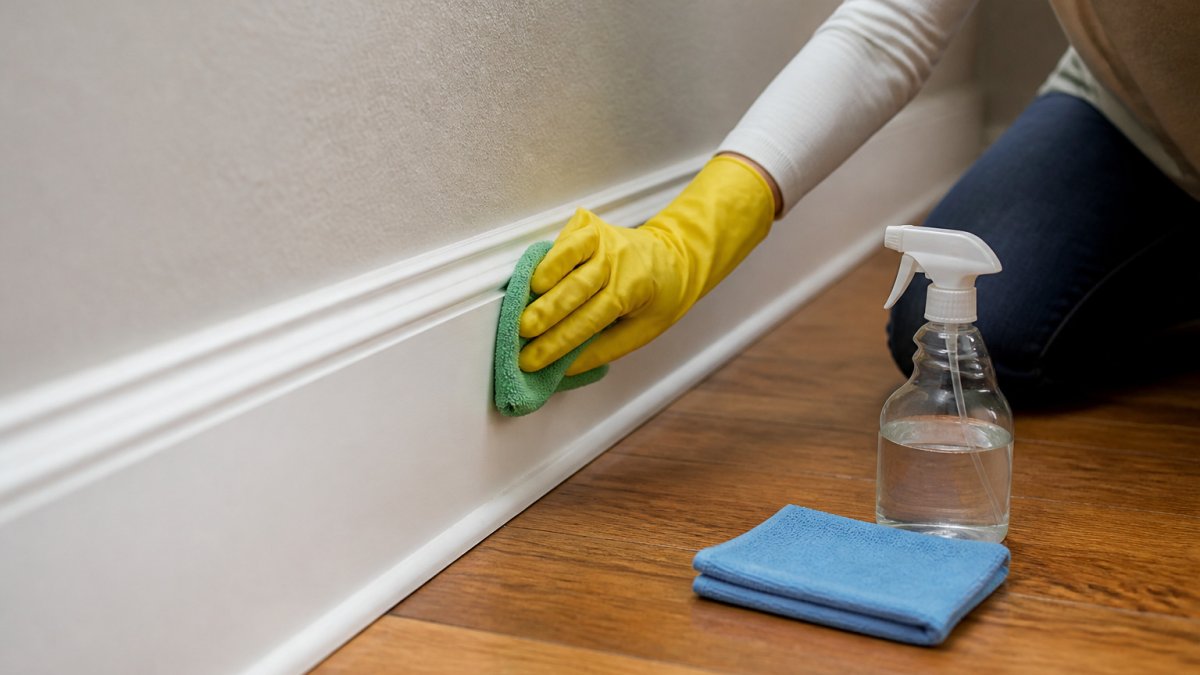
Everyday counters and the table: warm water, a little castile or dish soap, and a microfiber cloth. This handles the vast majority of messes.
After raw meat, eggs, or illness in the home: use a disinfectant per its label directions, let it sit for the stated contact time, then wipe. Contact time is the step most families skip.
Sponges and cloths: these harbor more germs than your counters. Swap or sanitize them often, this matters more than which spray you use.
Bathroom
Sinks, tubs, and fixtures: baking soda as a gentle abrasive for soap scum and grime; white vinegar for mineral buildup on glass and fixtures.
Toilets: a dedicated cleaner used as directed, with the lid down and the fan on.
Ventilation: run the exhaust fan during and after cleaning to move fumes and moisture out.
Bedrooms and living areas
Dust with a damp cloth rather than a dry one, so particles are captured instead of pushed into the air.
Laundry and bedding: fragrance-free detergent is the single easiest change for households with skin or respiratory sensitivities.
Floors: a damp mop with diluted all-purpose cleaner, then a plain-water rinse on the areas crawling babies and pets use most.
High-touch surfaces
Doorknobs, light switches, handles, remotes, and stair rails get touched constantly and cleaned rarely. A quick wipe with soap and water is usually enough; save disinfectant for when someone is sick.
When routine cleaning is enough, and when it is not
Cleaning removes germs, dirt, and residue. Disinfecting kills germs on a surface and only works if you follow the label's contact time. For most everyday messes, cleaning is sufficient. Reach for a disinfectant when exposure risk is genuinely higher: after raw meat, when someone is ill, or during an outbreak. Overusing disinfectants is harder on airways and surfaces.
Safe use, storage, and what to do after an accident
Even gentle products deserve respect:
Ventilate: open a window or run a fan while cleaning, especially in bathrooms.
Dilute: follow concentrate directions. More is not better, and over-strength solutions leave more residue.
Store safely: keep all cleaners, including "natural" ones, in child-resistant containers, out of reach of children and pets, and never in a food or drink container.
Never mix: do not combine bleach with vinegar, ammonia, or any acid. Do not mix hydrogen peroxide and vinegar in the same bottle.
Watch Out "Natural" does not mean "safe to swallow." Essential oils and concentrates can be harmful if ingested. Keep everything locked up, and call Poison Control immediately after any accidental ingestion or eye exposure.
Benefit | What changes at home | Easiest first step |
Fewer chemicals | Less residue on surfaces | Swap your kitchen spray |
Child and pet safety | Safer floors and counters | Rinse after cleaning |
Indoor air quality | Fewer fumes and triggers | Ventilate while cleaning |
Gentler on skin | Less irritation and reactions | Go fragrance-free |
Lower environmental impact | Less pollution and plastic | Buy concentrates |
How to Choose Non-Toxic Cleaning Products Without Getting Fooled
Choosing well comes down to reading the label rather than trusting the front of the bottle. "Green," "natural," and "eco-friendly" are marketing terms, not regulated ones, so the ingredient list is the only place that tells you much.
Here is how we would do it:
Look up the product in a third-party database before buying
Read the full ingredient list, not just the front label
Treat "fragrance" as unknown unless the brand discloses it
Prefer short ingredient lists you can actually pronounce
The limits of "non-toxic" claims are worth understanding. No cleaning product is completely risk-free, and how you use it matters as much as what is in it.
Natural Alternatives to Bleach for Home Cleaning
Natural alternatives to bleach handle most household jobs without the fumes.
White vinegar: cuts light grease and mineral buildup on glass and fixtures
Baking soda: gentle abrasive for sinks, tubs, and stovetops
Castile soap: all-purpose cleaning when diluted in warm water
Hydrogen peroxide: alternative for targeted disinfection on hard surfaces
One caution: never mix vinegar or any acid with bleach, and do not combine hydrogen peroxide and vinegar in the same bottle. Keep them separate.
If you want the benefits without the trial and error, that is what we do. Janicemariecleaningservices offers flexible scheduling, same-day estimates, and a personalized booking process, all backed by over two decades of experience. Call or email for a free estimate at 1-612-203-1686.
Switching your whole home at once is overwhelming, and most families stall before they start. Pick one room, replace one product, and build from there.
Frequently Asked Questions
What are the benefits of using non-toxic cleaning products?
The main benefits include reduced exposure to harsh chemicals, safer cleaning around children and pets, better indoor air quality, gentler products for skin and sensitive users, and less environmental pollution. Non-toxic cleaning also helps reduce asthma triggers and respiratory irritation, making it a practical choice for households with allergies or breathing concerns. Many families find that switching to plant-based or naturally derived ingredients supports overall household wellness without sacrificing cleaning effectiveness.
Are non-toxic cleaning products safer for children?
Non-toxic cleaning products reduce exposure to harsh chemicals that can cause skin irritation or respiratory irritation, which matters most for children who crawl on floors and put hands in their mouths. However, no cleaning product is completely risk-free if ingested. Store all cleaners, even natural ones, out of reach. For routine surface cleaning, soap and water with scrubbing handles most germs. Reserve disinfecting for high-risk situations like raw food preparation or illness in the home.
How can I tell whether a cleaning product is non-toxic?
Start by reading the product label and checking for plant-based or naturally derived ingredients. Look for third-party verification such as EWG VERIFIED status, which signals ingredient transparency. Be skeptical of broad marketing claims: 'non-toxic' is not a regulated term, so a product can carry that label without meeting a formal standard. Check specific ingredients against a resource like EWG's Guide to Healthy Cleaning, and avoid products with vague 'fragrance' listings if anyone in your home has chemical sensitivities.
What are some natural alternatives to bleach for home cleaning?
For routine cleaning, warm water with soap and scrubbing removes most germs from surfaces. Vinegar and baking soda handle many everyday tasks like deodorizing and light scrubbing. Hydrogen peroxide-based cleaners can disinfect when needed. Note that vinegar is not an EPA-registered disinfectant, so it should not replace disinfection after raw food preparation or during illness. For those situations, use an EPA-registered product, including non-toxic options, and follow the label's contact time.
How often should you really clean your house?
High-touch surfaces like doorknobs, light switches, and countertops benefit from daily or every-other-day wiping. Floors and bathrooms typically need weekly attention, while deeper tasks like baseboards and inside appliances can be monthly or quarterly. Households with pets, young children, or allergy sufferers usually need more frequent routine cleaning. If someone is sick, clean and disinfect high-touch surfaces more often. A consistent schedule matters more than intensity: regular soap-and-water cleaning prevents buildup and germ spread.
CALL OR EMAIL FOR A FREE ESTIMATE 1-612-203-1686

Comments